

What Is Radio Frequency Microneedling — and Does It Actually Work?
Radio frequency microneedling is a minimally invasive skin treatment that combines two proven technologies — tiny needles and RF (radiofrequency) energy — to stimulate your skin’s natural collagen production from the inside out.
Quick answer for busy readers:
| Question | Answer |
|---|---|
| What does it treat? | Wrinkles, skin laxity, acne scars, large pores, uneven texture, hyperhidrosis |
| How does it work? | Microneedles create micro-injuries; RF energy heats deeper skin layers to trigger collagen remodeling |
| How many sessions? | Typically 2–4 sessions, spaced 4–8 weeks apart |
| Downtime? | Minimal — most people resume normal activity within 24 hours |
| When do results show? | Visible improvement at 3–6 months as new collagen forms |
| Safe for all skin types? | Yes — RF energy is color-blind and does not target skin pigment |
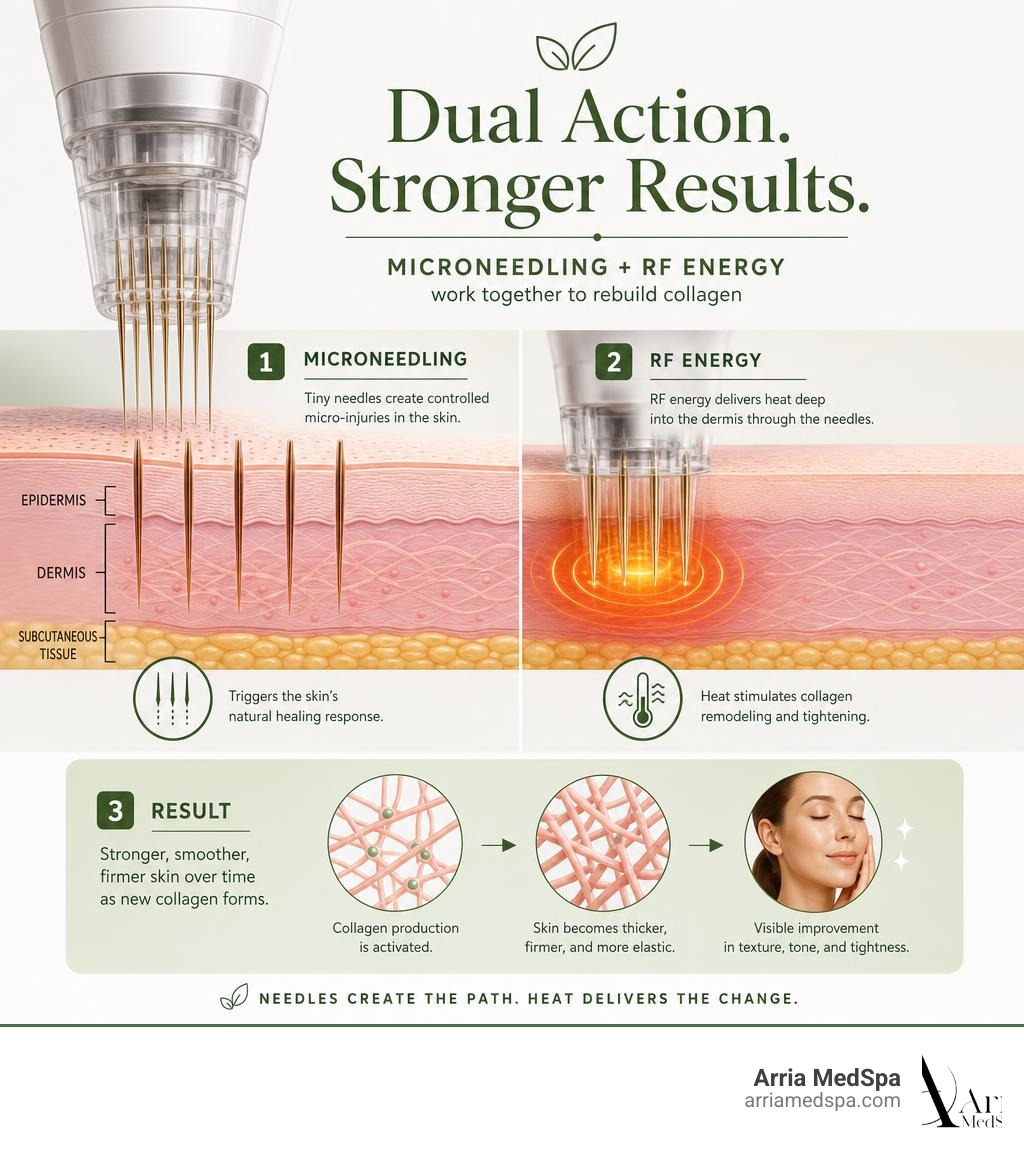
Here’s the core idea: your skin is tricked into healing itself. The micro-injuries from the needles, combined with heat delivered deep into the dermis, trigger a wound-healing response. The result? Thicker, firmer, smoother skin — without surgery.
It’s not magic. It’s biology.
I’m Stephanie J. Rosen, a Physician Assistant with over 20 years of experience in Plastic Surgery and Dermatology, where I’ve worked closely with radio frequency microneedling as part of comprehensive skin rejuvenation protocols. I’ll walk you through exactly how this treatment works, what the science says, and how to know if it’s right for you.
The Science Behind Radio Frequency Microneedling
To understand why this treatment has become the darling of modern aesthetic medicine, we have to look beneath the surface—literally. Standard microneedling is fantastic for surface-level texture. It works by creating microscopic punctures in the epidermis, which triggers a localized healing response.
However, when we introduce radiofrequency (RF) energy into the equation, we elevate the entire process. The needles act as highly precise conductors. Once they reach their programmed depth in the dermis, they release a pulse of RF energy. This electrical energy meets natural resistance in our skin tissues, creating a physical phenomenon known as Joule heating.
Energy (Joules) = I² × R × T
(Where I = current, R = tissue impedance, and T = pulse duration)
This heat is not applied randomly. It creates controlled, microscopic columns of thermal damage known as Radiofrequency Thermal Zones (RFTZs). These cocoon-shaped zones of heat are surrounded by completely untouched, healthy tissue. Because the surrounding skin remains intact, your body’s natural healing cascade is accelerated, leading to rapid tissue repair without the prolonged downtime associated with older, fully ablative treatments.
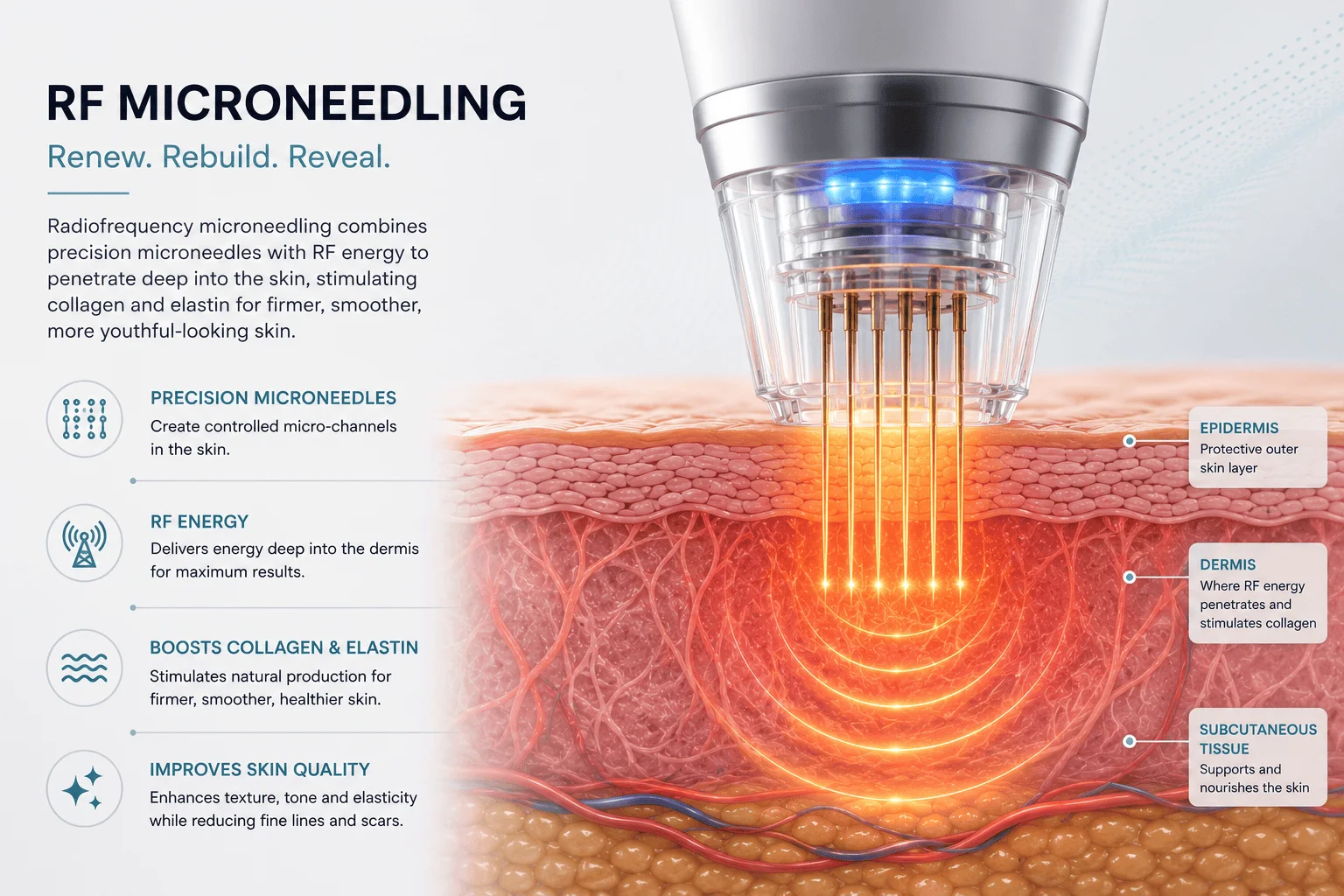
At the physical level, tissue impedance (the resistance of your skin to electrical current) plays a vital role. Different layers of the skin have different conductivity levels. For example, the papillary dermis has relatively low impedance, while subcutaneous fat has much higher resistance. As the RF energy encounters this resistance, it generates heat.
Interestingly, as tissue temperature rises, its impedance actually decreases by about 2% for every 1°C increase. This continues until the tissue coagulates. Understanding these physics—as detailed in comprehensive medical literature like the Physics of fractional microneedle radiofrequency—allows skilled practitioners to customize settings to achieve predictable, uniform tissue warming.
By combining physical micro-injuries with deep thermal stimulation, we unlock the full spectrum of microneedling benefits, prompting the body to manufacture both fresh collagen and springy elastin fibers.
Insulated vs. Non-Insulated Needles
One of the most important technical distinctions in radio frequency microneedling is the choice between insulated and non-insulated needles.
- Insulated Needles: These needles are coated with a medical-grade ceramic or silicone sheath along their entire length, leaving only the very tip (usually the last 300 micrometers) exposed. Because the RF energy is only emitted from the active tip, the heat is delivered strictly to the deep dermis. The superficial layer of the skin (the epidermis) remains completely protected from thermal damage. This makes insulated needles highly predictable and the absolute gold standard when performing RF microneedling for darker skin tones, as protecting the epidermis dramatically minimizes the risk of post-inflammatory hyperpigmentation (PIH).
- Non-Insulated Needles: These needles are active along their entire length, acting as a single continuous electrode. When they fire, RF energy is emitted throughout the entire needle tract, heating both the deep dermis and the superficial layers simultaneously. While this can provide excellent surface-level texture improvement and skin tightening in lighter skin types, it requires a cautious hand and lower energy settings to protect the outer skin from burns.
Coagulation Volume and Collagen Remodeling
The ultimate goal of delivering RF heat to the dermis is to trigger neocollagenesis (the creation of new collagen) and neoelastogenesis (the creation of new elastin). To do this, we must reach a very specific thermal threshold.
The optimal temperature to denature old, stretched-out collagen fibers and kickstart new growth is approximately 67°C. If the tissue temperature is too low (under 60°C), the collagen fibers won’t denature, and the clinical response will be minimal. If the temperature exceeds 85°C in a fraction of a second, you risk excessive scarring or tissue charring.
According to a landmark Histological and clinical dose-response analysis, there is a direct, mathematically predictable relationship between the energy delivered per needle (measured in millijoules, or mJ) and the volume of thermal coagulation produced in the skin:
- At 20 mJ of energy per needle, the resulting coagulation volume is roughly 0.033 mm³.
- At 60 mJ, the volume increases to 0.173 mm³.
- At 100 mJ, the coagulation volume expands to 0.353 mm³.
This ex vivo histological data proves that by adjusting the energy levels, practitioners can precisely scale the volume of treated tissue. Furthermore, 3D volumetric clinical analysis of patients undergoing treatment showed a strong logistic correlation between the total energy applied across the face and the actual clinical volume change (skin tightening and lifting) in the lower face and submental areas.
Clinical Indications, Parameters, and Laser Comparisons
Because of its unique ability to remodel the structural foundations of the skin, radio frequency microneedling is an incredibly versatile treatment.
Key Benefits of Radio Frequency Microneedling
We frequently recommend this treatment to address a wide range of structural and cosmetic skin concerns:
- Skin Tightening & Laxity: By heating the deep reticular dermis, RF energy causes immediate contraction of loose collagen fibers, while triggering long-term tissue remodeling. This is highly effective for lifting the jowls, tightening the neck, and smoothing out crepey skin.
- Acne and Traumatic Scars: Scars are essentially disorganized bands of collagen. The combination of physical microneedles breaking up the fibrous scar tissue and RF energy stimulating fresh, organized collagen helps to lift and smooth out deep depressions. A 2014 clinical study demonstrated that RF microneedling moderately to significantly improved acne scars in 58% of participants.
- Wrinkle and Fine Line Reduction: By thickening the dermal layer, the treatment naturally plumps the skin from within. A 2013 study found that RF microneedling significantly reduced wrinkles around the delicate eye area, with results that actually outlasted typical neuromodulator injections.
- Hyperhidrosis (Excessive Sweating): In 2019, clinical research confirmed that RF microneedling can provide a permanent solution for hyperhidrosis. By delivering targeted thermal energy to the precise depth of the sweat glands in the underarms, the treatment safely deactivates them without affecting the surrounding tissues.
These diverse applications highlight why the clinical demand for RF microneedling benefits continues to grow rapidly.
Customizing Depth, Energy, and Pulse Duration
To achieve optimal results without compromising safety, treatment parameters must be customized for every individual. We don’t use a “one-size-fits-all” setting. Instead, we adjust three primary variables:
- Needle Depth: Skin thickness varies dramatically across the face and body. For the delicate periorbital (under-eye) area, we use shallow depths of 0.5 mm to 1.0 mm. For the cheeks and acne scarring, we typically target 1.5 mm to 2.5 mm. For the submental (under chin) area or body treatments, we may go as deep as 3.5 mm to 4.5 mm.
- Pulse Duration (Time): This is the length of time the RF energy is active inside the skin. Longer pulse durations allow the heat to spread slightly, creating a larger volume of thermal coagulation, which is excellent for deep skin tightening.
- Energy Levels: Higher energy levels yield more dramatic results but require careful skin cooling and preparation to manage comfort.
When treating areas with excess tissue laxity or pocketed fat (such as jowls or submental fullness), deep settings can even be used for targeted non-surgical fat reduction by gently heating and disrupting localized adipocytes (fat cells).
To maximize safety and efficacy, we often use a multi-pass layering technique. We start our first pass at the deepest desired depth to target the deep dermis. On subsequent passes, we decrease the needle depth. This creates a multi-layered zone of dermal coagulation.
Crucially, we avoid “stacking” or repeating passes at the exact same depth during a session. Because tissue impedance drops as the skin heats up, stacking passes at the same depth can cause the electrical current to flow unpredictably, increasing the risk of surface burns.
RF Microneedling vs. Fractional Lasers
When evaluating our skin treatments overview, patients often ask how RF microneedling compares to fractional ablative or non-ablative lasers (like Fraxel or CO2).
The primary difference lies in how the energy is delivered:
| Feature | RF Microneedling | Fractional Lasers |
|---|---|---|
| Energy Source | Radiofrequency (Electrical) | Light (Laser) |
| Chromophore Dependent? | No (Color-Blind) | Yes (Targets Water/Melanin) |
| Epidermal Disruption | Minimal (~5%) | Moderate to High (10% – 70%) |
| PIH Risk in Darker Skin | Extremely Low | Moderate to High |
| Average Downtime | 24 – 48 hours | 5 – 10 days |
| Primary Target | Deep Dermis Remodeling | Superficial & Dermal Resurfacing |
Because lasers use light energy, they are highly dependent on chromophores (pigments like melanin or water in the skin). This means that in darker skin types, the laser energy can be absorbed by the melanin in the epidermis, potentially causing burns, scarring, or severe hyperpigmentation.
RF energy, on the other hand, is completely color-blind. It bypasses the pigment-producing cells in the surface of the skin entirely, making it incredibly safe for all skin tones. Furthermore, because fractional RF causes only about 5% epidermal disruption compared to up to 70% with fractional lasers, the healing process is significantly faster.
Safety, Side Effects, and Aftercare Protocols
Radio frequency microneedling devices are classified as Class II medical devices by the FDA, cleared through the stringent 510(k) pathway. Because this is a medical procedure that involves delivering intense thermal energy deep into the tissues, it must always be performed by a licensed, highly trained professional under medical oversight.
What to Expect During a Radio Frequency Microneedling Session
If you decide to undergo treatment, here is what a typical session at Arria MedSpa looks like:
- Preparation: We start by thoroughly cleansing your skin. We then apply a custom-compounded prescription numbing cream, which sits on the skin for roughly 30 to 45 minutes. This step is crucial for ensuring a comfortable experience.
- The Treatment: Once the skin is fully numb, we perform the treatment. Modern platforms, like the Vivace RF microneedling system, utilize a sophisticated robotic step motor. This robotic mechanism inserts the ultra-thin gold-plated needles into the skin with absolute precision, preventing any tearing or snagging of the tissue.
- Sensation: Most patients describe the sensation as a light, warm pressure with an occasional mild “sparking” or prickly feeling. On a discomfort scale of 1 to 10, the vast majority of our patients rate it as a 1 or 2.
- Duration: The active microneedling portion of the treatment typically takes only 20 to 30 minutes for a full face.
Recovery Timeline and Post-Treatment Care
One of the greatest advantages of this technology is the incredibly gentle recovery timeline.
- Hours 1–4: Your skin will look moderately red and feel warm, similar to a mild sunburn. The microchannels created by the needles remain open for about 4 to 6 hours. During this golden window, the skin is highly receptive to topically applied active ingredients, making it the perfect time to apply pure hyaluronic acid or growth factor serums.
- Hours 24–48: The redness (erythema) typically fades dramatically within 24 hours. While standard standard microneedling systems like Dermapen microneedling also offer rapid recovery, the added thermal energy of RF actually helps to coagulate tiny blood vessels, resulting in even less pinpoint bleeding and bruising. Most patients feel perfectly comfortable returning to work or social activities the very next day.
- First 3 Days: We advise keeping your skincare routine incredibly simple. Use a gentle, non-stripping cleanser and a physical (mineral) SPF of 30 or higher. Avoid active ingredients like retinol, salicylic acid, or vitamin C for at least 72 hours. You should also skip intense workouts, hot tubs, and heavy makeup during this brief window to allow the epidermal barrier to fully recover.
Frequently Asked Questions About RF Microneedling
How many sessions are typically needed for optimal results?
While some patients notice an immediate “glow” due to temporary tissue edema and early collagen contraction, true structural remodeling takes time. We generally recommend a series of 3 to 4 sessions, spaced roughly 4 to 6 weeks apart.
Because collagen synthesis is a gradual biological process, your most dramatic results—including smoother texture, reduced acne scars, and firmer skin—will become visible between 3 to 6 months after your final session. To maintain these beautiful, natural-looking results, we recommend a single touch-up session once a year.
Is the procedure safe for all skin types?
Yes! Because radiofrequency energy does not target melanin (pigment), it is highly safe for all skin types on the Fitzpatrick scale, including deep brown and black skin tones. To ensure absolute safety, we always utilize insulated needle tips for darker skin types, which guarantees that the heat energy is confined entirely to the deep dermis, leaving the pigment-rich surface of the skin completely cool and unaffected.
What are the potential risks or serious complications?
When performed by an inexperienced or unlicensed operator, RF microneedling carries real medical risks. The FDA has issued safety communications warning of serious complications from improper use, including severe burns, permanent scarring, unintended fat loss (which can cause a gaunt, aged appearance), skin disfigurement, and nerve damage.
These risks highlight why it is absolutely vital to avoid “at-home” or unregulated salon devices. To protect your skin, always seek treatment from a medical aesthetics practice with board-certified surgical oversight and extensive clinical experience.
The Youthful-Skin Takeaway
If you are looking for a scientifically proven, minimally invasive way to restore your skin’s youthful bounce, smooth out stubborn acne scars, or tighten a softening jawline, radio frequency microneedling may indeed be the closest thing we have to a modern skin-rejuvenation secret.
At Arria MedSpa, located in the heart of Montclair, New Jersey, we believe that the best aesthetic treatments are those that yield beautifully natural-looking results. Under our expert medical and board-certified surgeon oversight, we customize every pulse, depth, and energy setting to match your unique skin profile safely and comfortably.
Ready to experience the transformative power of customized skin remodeling? Schedule a consultation for RF microneedling benefits with our expert team at Arria MedSpa today, and let us help you put your best, most radiant face forward.