
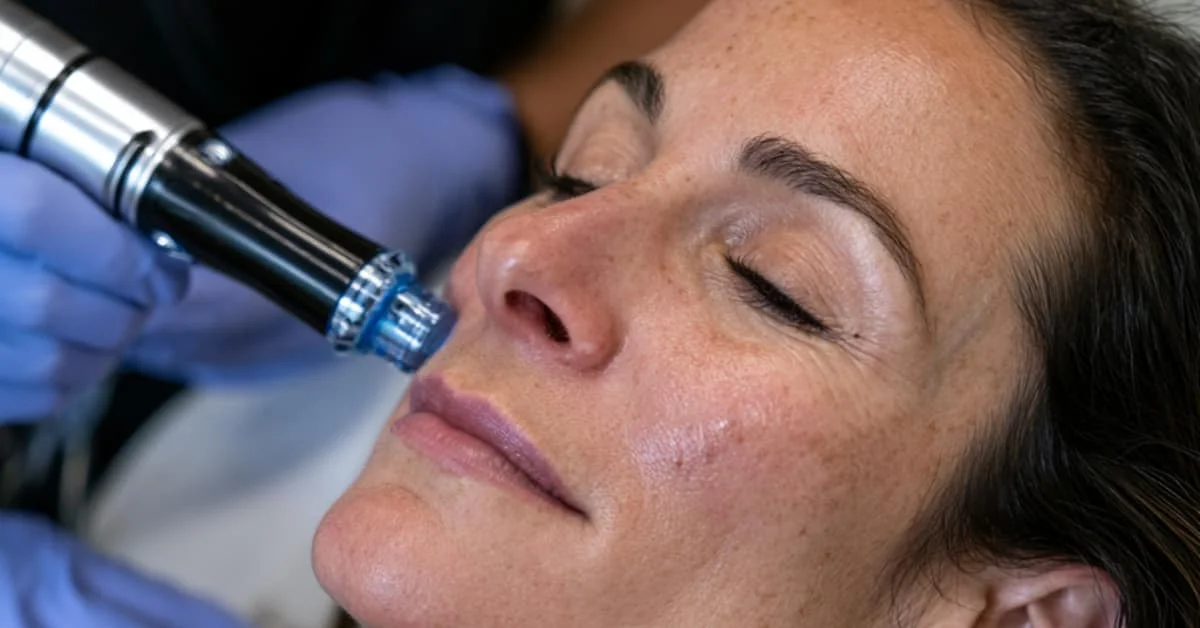
What Is RF Microneedling? A Quick Overview
RF microneedling is a minimally invasive cosmetic procedure that combines tiny needles with radiofrequency energy to stimulate your skin’s natural collagen and elastin production — resulting in firmer, smoother, younger-looking skin.
Here’s what you need to know at a glance:
- What it treats: Fine lines, wrinkles, acne scars, sagging skin, large pores, stretch marks, and uneven texture
- How it works: Tiny needles create controlled micro-injuries in the skin while delivering radiofrequency heat energy into the deeper dermal layers
- Who it’s for: Most skin types and tones, including darker complexions
- Sessions needed: Typically 3–4 treatments spaced 4–6 weeks apart
- Results timeline: Initial improvements within weeks; full results at 3–6 months
- How long results last: Up to 1–2 years, with annual maintenance recommended
- Downtime: Minimal — most people return to normal activities within 24–48 hours
If you’ve noticed your skin losing its firmness, developing fine lines, or showing stubborn acne scars that just won’t budge, you’re not alone — and you’re likely not interested in aggressive surgery or lengthy recovery times. RF microneedling sits in a sweet spot: it goes deeper than a standard facial, delivers real and lasting results, and fits into a busy life without weeks of downtime.
Unlike traditional microneedling, which works only at the skin’s surface, RF microneedling targets the deeper layers of the skin — the dermis — where collagen actually lives. The combination of physical micro-injuries and radiofrequency heat triggers a powerful healing response, rebuilding the skin’s structure from the inside out.
A 2013 study even found that RF microneedling reduced wrinkles around the eyes with effects that lasted longer than Botox injections — a finding that speaks to just how meaningful this treatment can be for long-term skin health.
My name is Stephanie J. Rosen, a Board-Certified Physician Assistant with over two decades of experience in plastic surgery and dermatology, including extensive work with RF microneedling and other advanced skin rejuvenation treatments. I’ll walk you through everything you need to know to decide if this treatment is right for you.
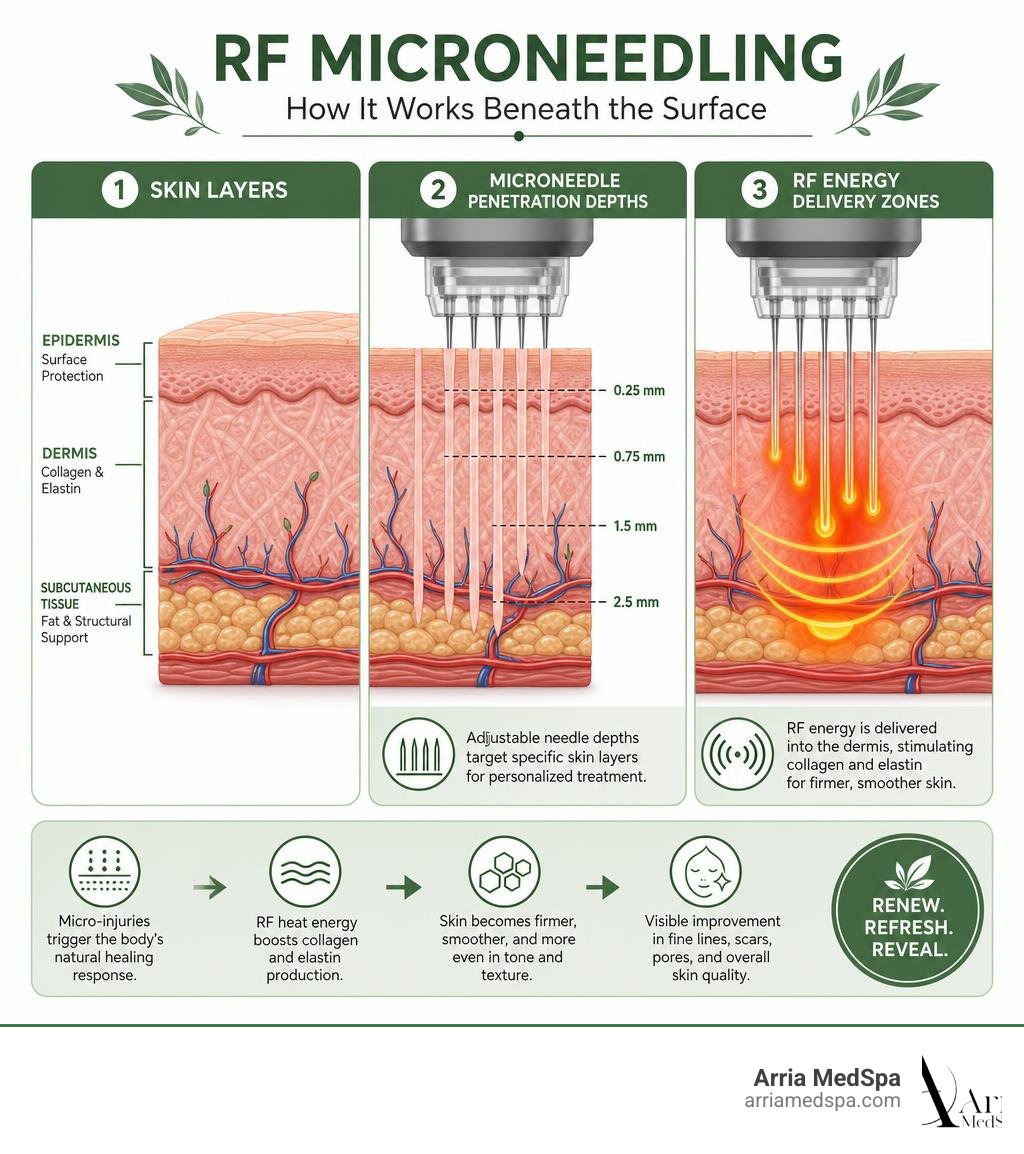
Handy rf microneedling terms:
What is RF Microneedling and How Does It Work?
To understand why rf microneedling is making such a splash in the aesthetic world, we have to look under the surface of the skin. At its core, this treatment is a dual-action powerhouse. It relies on collagen induction therapy — the process of creating microscopic, controlled wounds to trigger your body’s natural healing system — and supercharges it with thermal energy.
When you undergo a Radio Frequency Microneedling session, a specialized handpiece containing an array of ultra-fine, gold-plated needles is gently pressed against your skin. As these sterile needles make their micro-penetrations, they don’t just sit there. They act as microscopic conductors, emitting radiofrequency (RF) waves directly into the deeper dermal tissue.
This thermal injury causes immediate, subtle tightening while setting off a biological chain reaction called neocollagenesis (the creation of fresh, strong collagen fibers). Over the following weeks and months, your skin remodels itself, replacing old, damaged tissue with a fresh matrix of collagen and elastin.
The Science of Radiofrequency Energy
Why add radiofrequency to a needle treatment? It all comes down to heat and depth. Traditional treatments can struggle to safely heat the deeper layers of the skin without burning the surface. RF energy ignores epidermal melanin (the pigment on the surface), allowing us to safely deliver heat deep down where it counts.
Most modern devices utilize bipolar RF energy, which flows between pairs of closely spaced needles. This configuration confines the thermal activity to a highly controlled zone. As the energy passes through the tissue, it meets natural resistance (impedance), which generates heat.
This localized heating creates what dermatologists call zones of electrocoagulation. When the tissue reaches an optimal thermal threshold — ideally around 67°C for a brief moment — it causes immediate collagen contraction and kicks the healing response into overdrive. To learn more about how this heat diffuses safely through the skin, you can read this Scientific research on electrocoagulation.
Targeted Needle Depths for Facial Anatomy
Your skin is not a uniform sheet of paper; its thickness varies dramatically depending on where you look. For instance, the epidermal thickness on your eyelids is paper-thin, while the dermal thickness on your cheeks or forehead is much more substantial.
To achieve optimal outcomes, the needle depth must be precisely targeted to the reticular dermis (the lower layer of the dermis where collagen remodeling is most effective). According to an Academic review on RF microneedling parameters, clinical guidelines suggest customizing needle depths based on anatomical regions:
- Forehead and Temporal Skin: At least 1.5 mm to reach the reticular dermis safely without scraping the underlying bone.
- Malar Region (Cheeks): 1.0 mm to target mid-dermal laxity.
- Nasal Side Walls: 2.0 mm to address larger pores and fibrous tissue.
- Perioral Skin (Around the Mouth): 0.5 mm to delicately treat vertical lip lines without damaging sensitive muscle tissue.
- Neck: 1.5 mm to safely tighten loose skin while avoiding delicate underlying glands and vessels.
By customizing these depths, a skilled provider ensures you get maximum tightening exactly where you need it, and gentle care where your skin is thinnest.
Comparing Radiofrequency and Traditional Microneedling
If you’ve ever had a classic microneedling session, you know the drill: a pen-like device moves across your skin, creating tiny holes to improve texture. While classic microneedling is fantastic for superficial issues, upgrading to the radiofrequency version is like swapping a bicycle for a sports car.
Here is a quick breakdown of how these two treatments stack up against each other:
| Feature | Traditional Microneedling | RF Microneedling |
|---|---|---|
| Primary Mechanism | Purely mechanical injury (needles only) | Mechanical injury + thermal energy (RF heat) |
| Target Depth | Superficial layers (epidermis to upper dermis) | Deep dermal layers (up to 3.5 mm or deeper) |
| Skin Tightening | Mild (texture improvement) | Dramatic (collagen contraction & volume building) |
| Typical Sessions Needed | 4 to 6 sessions | 3 to 4 sessions |
| Downtime | 1 to 2 days of sunburn-like redness | 2 to 3 days of mild redness and warmth |
| Suitability for Deep Scars | Moderate | Excellent |
To learn more about the classic mechanical option, check out our guide on Dermapen Microneedling.
Key Differences in Technology and Results
The magic of RF microneedling lies in the addition of thermal energy. While traditional microneedling relies solely on physical needles to trigger healing, the RF version delivers heat that causes immediate collagen contraction. This means you get an instant “lift” effect that continues to improve over time.
Additionally, RF devices often use insulated needles. These needles are coated in a protective material except for their very tips. This design ensures that the delicate surface of your skin (the epidermis) remains completely protected from heat, while the thermal energy is released exclusively at the precise target depth. Non-insulated needles, on the other hand, deliver energy along their entire length, which can be useful for treating superficial texture and pigment issues simultaneously but may require slightly more recovery time.
Why Upgrade to RF Microneedling?
Is it worth the upgrade? For most patients looking to address aging or structural concerns, the answer is a resounding yes. Because the combination of physical and thermal energy is so powerful, you generally need fewer sessions to achieve your goals.
While traditional microneedling is excellent for surface brightness and very mild acne scars, RF microneedling goes deeper to provide true skin tightening, contouring, and deep scar remodeling. You can read more about what to expect from these structural changes in our breakdown of Microneedling Benefits and Treatment Results.
Clinical Benefits and Skin Concerns Treated
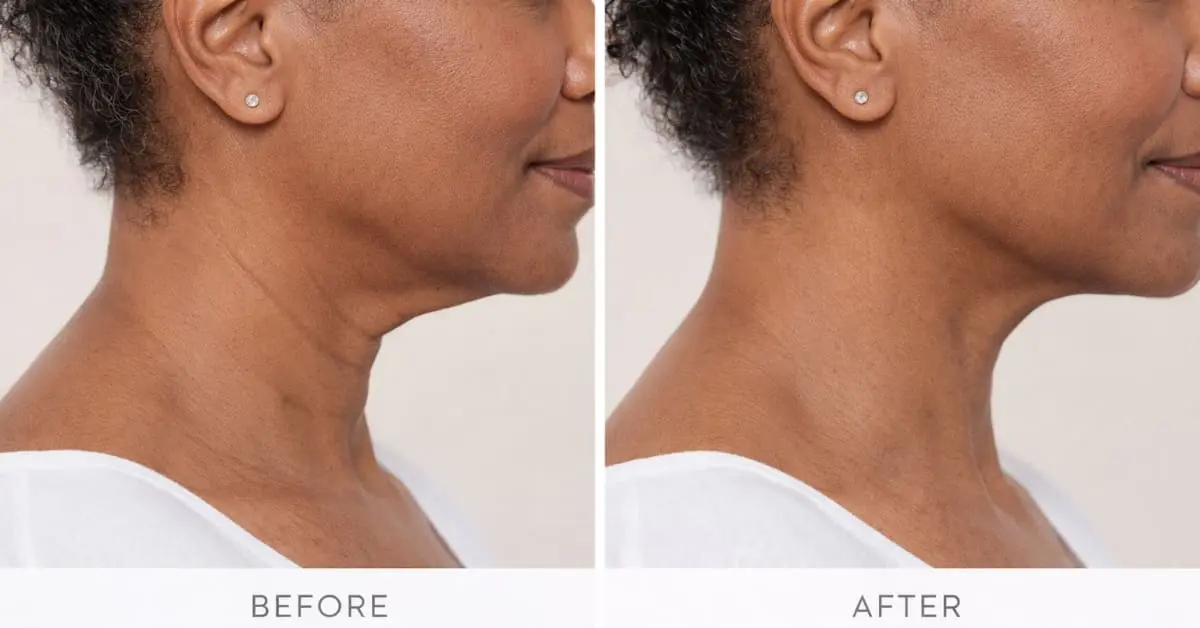
Whether you are trying to erase the evidence of teenage breakouts or restore a youthful bounce to your jawline, RF microneedling is a versatile workhorse. By triggering deep collagen and elastin production, it addresses a broad spectrum of structural and cosmetic concerns. To see how this fits into a broader anti-aging strategy, explore our Skin Tightening Treatments at Arria Medspa.
Skin Tightening and Wrinkle Reduction
As we age, our skin’s natural support structures begin to degrade, leading to wrinkles (rhytids), skin laxity, and the dreaded “joweling” along the jawline. RF microneedling targets these issues by heating the deep dermis to contract existing collagen fibers and stimulate the production of new, springy elastin.
For those looking for comprehensive facial rejuvenation, combining this therapy with other modalities can yield incredible results. If you are curious about non-needle alternatives for surface firming, you might also enjoy reading about Achieving Skin Tightness with SkinTyte Therapy.
Acne Scarring and Texture Improvement
Acne scars — especially deep, atrophic scars like ice-pick and boxcar scars — are notoriously difficult to treat because they represent areas where the skin’s deeper structural support has been lost. RF microneedling breaks up this fibrous, scarred tissue with physical needles while the RF energy remodels the surrounding collagen, raising the depressions to create a smoother surface.
In fact, a 2014 study of 31 people demonstrated that radiofrequency microneedling moderately improved acne scars in 58 percent of the participants after just a few sessions.
But the benefits don’t stop at scars. An interesting 2019 study found that RF microneedling can permanently treat hyperhidrosis (excessive sweating) by delivering thermal energy that safely reduces the size and activity of overactive sweat glands. For a highly detailed clinical breakdown of these applications, check out this Clinical glossary on RF microneedling.
The Treatment Experience: Preparation, Procedure, and Aftercare

Knowing what to expect can take the anxiety out of any cosmetic procedure. While RF microneedling is a medical-grade treatment, the actual experience is highly controlled and designed with patient comfort in mind. To view our full menu of skin-rejuvenating options, visit our main Skin Treatments page.
Pre-Treatment Guidelines
Getting the best results starts before you even walk through our doors. Here is how to prepare your skin:
- Sun Avoidance: Avoid direct sun exposure and tanning beds for at least 2 to 4 weeks prior to treatment. Sunburned or highly tanned skin cannot be safely treated.
- Active Ingredients: Discontinue harsh skincare products, including retinoids (Retin-A), glycolic acid, salicylic acid, and vitamin C, for 3 to 5 days before your session.
- Antiviral Prophylaxis: If you have a history of cold sores (HSV-1) in the treatment area, let us know! We will prescribe a preventative antiviral medication to take before your appointment.
- Hydration: Drink plenty of water in the days leading up to your treatment. Well-hydrated skin conducts RF energy more efficiently and heals faster.
What to Expect During the RF Microneedling Procedure
On the day of your treatment, we will first thoroughly cleanse your skin. Next, we apply a strong topical anesthetic (numbing cream) to ensure you remain comfortable. This sits on your skin for about 30 to 45 minutes.
Once you are numb, the treatment begins. Your provider will pass the sterilized handpiece over the target areas. You will feel a light pressing sensation and a brief wave of warmth as the gold-plated needles deliver the energy.
Advanced RF microneedling systems feature real-time impedance monitoring. This means the device measures your skin’s unique resistance 500 times per second, automatically adjusting the energy output to ensure a perfectly consistent, safe, and effective treatment. The active portion of the procedure typically takes just 20 to 45 minutes depending on the size of the area.
Post-Treatment Recovery and Aftercare
Immediately after the procedure, your skin will feel warm, tight, and flushed, very much like a moderate sunburn. This transient erythema (redness) and mild edema (swelling) are completely normal and typically peak within the first 24 to 48 hours.
To support your skin’s recovery timeline, follow these simple rules:
- Keep It Clean: Use only a gentle cleanser and lukewarm water for the first 72 hours. Pat your skin dry with a clean towel; do not rub.
- Hydrate: Apply a pure hyaluronic acid serum or a gentle, fragrance-free moisturizer to keep the skin barrier hydrated.
- Sun Protection: Avoid direct sun exposure. After the first 24 hours, apply a broad-spectrum physical (mineral) SPF 30+ daily.
- Makeup Avoidance: Skip the foundation and makeup for at least 24 to 48 hours to allow the micro-channels to fully close without irritation.
- Skip the Gym: Avoid heavy workouts, hot showers, saunas, and steam rooms for 48 to 72 hours, as sweat and heat can worsen swelling.
Safety, Risks, and FDA Recommendations
Because RF microneedling involves delivering thermal energy deep beneath the skin, it is classified as a medical procedure, not a simple spa facial. Understanding the safety profile and regulatory status of these devices is crucial for protecting your health and your skin.
Potential Side Effects and Complications
For the vast majority of patients, side effects are mild and temporary. You can expect transient redness, minor swelling, and perhaps some light peeling or tiny crusts (grid marks) as the old skin cells shed. These usually resolve within 3 to 7 days.
However, because these are Class II medical devices cleared by the FDA through the 510(k) process, serious complications can occur if the treatment is performed incorrectly. If the energy is set too high, the needles are placed too deep, or the provider lacks training, risks include:
- Burns and Scarring: Excessive heat can damage the epidermis or create deep thermal scars.
- Fat Loss: If settings are improperly applied to areas with thin tissue, unwanted subdermal fat loss can occur, leading to a hollowed appearance.
- Nerve Damage: Deep, aggressive needle penetration in delicate anatomical zones can temporarily or permanently affect facial nerves.
FDA Safety Communications and Device Clearances
The FDA has issued safety communications reminding consumers that RF microneedling devices should never be used at home. Because of the risk of infection, burns, and permanent scarring, these procedures require strict professional supervision.
When choosing where to have your treatment, verify that the clinic uses FDA-cleared devices and that your provider possesses the medical qualifications and training to customize the energy settings to your specific skin profile.
Frequently Asked Questions
How many sessions are typically needed, and when do results appear?
While you might notice a subtle glow and smoother texture within a week of your first session, collagen remodeling is a marathon, not a sprint. Most patients require a series of 3 to 4 treatments spaced at session intervals of 4 to 6 weeks.
You will experience gradual improvement over the next 3 to 6 months as peak collagen production is reached. The results typically last about 1 year, and we recommend a single annual maintenance session to keep your skin looking its absolute best.
Is the procedure safe for darker skin tones?
Yes! One of the greatest advantages of RF microneedling is its safety profile across all Fitzpatrick skin types (I through VI). Because the radiofrequency energy is delivered deep into the dermis via insulated needles, it bypasses the melanin-producing cells on the surface of the skin.
This significantly reduces the risk of postinflammatory hyperpigmentation (PIH), which is a common concern with traditional laser resurfacing on darker skin. To learn more about how we customize settings for deep complexions, read our guide on RF Microneedling for Darker Skin Tones.
What is the typical cost of the treatment, and is it covered by insurance?
The cost of RF microneedling varies widely depending on your geographic location, the areas being treated, and the expertise of your provider. On average, a single session can range from $500 to $1,200. Because this is a purely elective cosmetic procedure, it is subject to a cosmetic exclusion and is not covered by health insurance. Most patients pay for their treatments as out-of-pocket expenses.
Your Skin’s Next Chapter
RF microneedling represents a true breakthrough in non-surgical skin rejuvenation. By combining the physical benefits of microneedling with the deep thermal power of radiofrequency energy, it offers a safe, highly effective path to smoother, firmer, and more radiant skin.
At Arria MedSpa, located in the heart of Montclair, NJ, we believe that the best results are those that look entirely natural. Our practice combines board-certified surgeon oversight with highly trained medical professionals to ensure your safety and deliver the gorgeous, subtle outcomes you deserve. Whether you live in Montclair or surrounding areas like Verona, Cedar Grove, Glen Ridge, or Bloomfield, we are here to help you love the skin you’re in.
Are you ready to take the next step? Schedule a consultation to experience the RF Microneedling Benefits at Arria MedSpa today!