
Collagen Thread Treatment: What to Know First
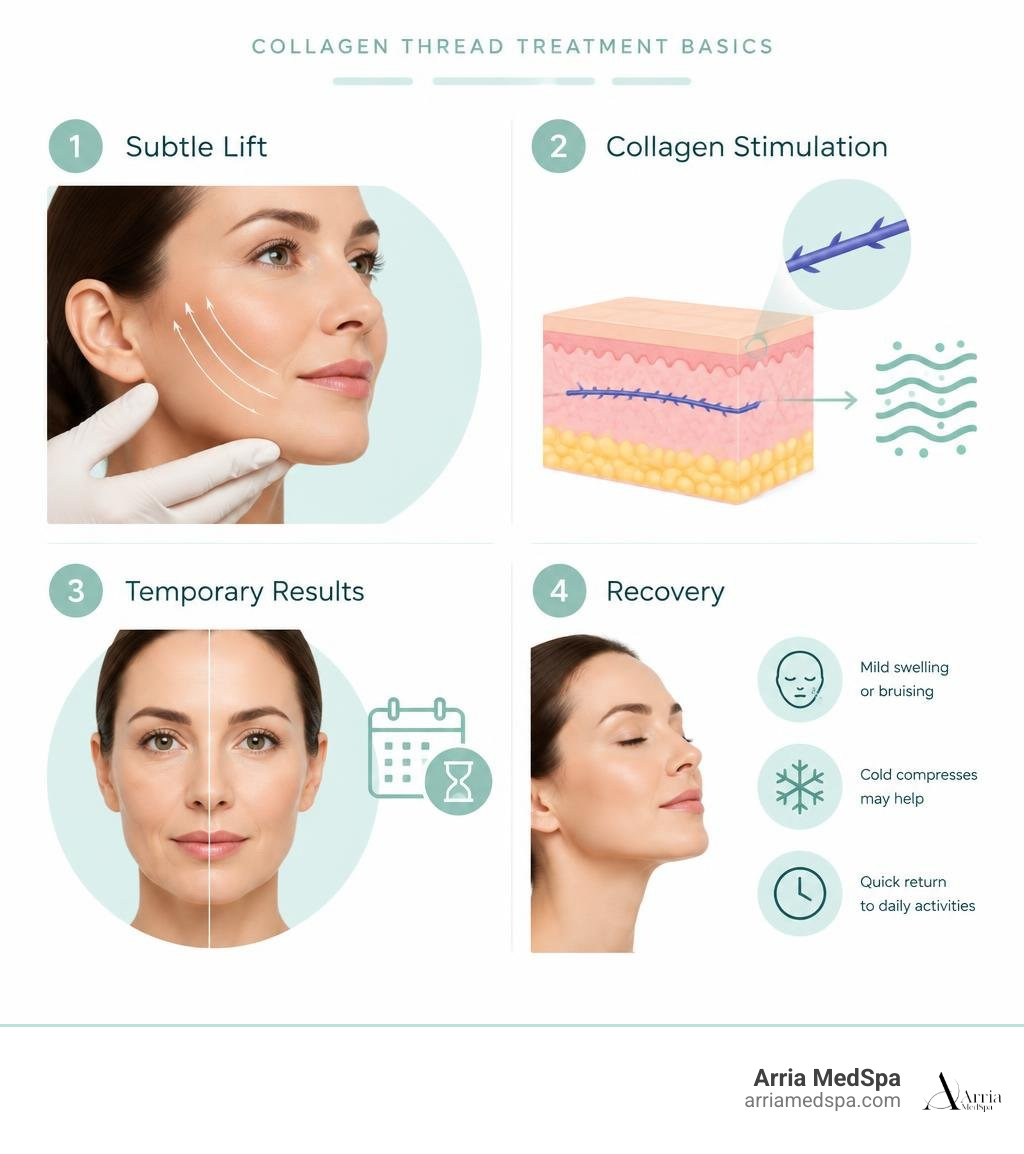
Collagen thread treatment places absorbable medical threads beneath the skin to give it a subtle lift and encourage new collagen to form. Barbed threads can help reposition loose skin; smooth threads are used mainly to improve skin firmness. The treatment is best suited to mild to moderate sagging, not a substitute for a more dramatic degree of lift. Results are temporary, and some swelling or bruising is common at first.
This guide explains what the treatment involves, how long results may last, and which risks to discuss with a qualified provider. Arria MedSpa is a state-of-the-art facility in Montclair, NJ, focused on natural-looking aesthetic results.
I’m Stephanie J. Rosen, a board-certified physician assistant who has worked in plastic surgery and cosmetic medicine since 2005. That experience helps me explain the questions patients should ask when considering collagen thread treatment.
What Is a Thread Lift and How Does It Rejuvenate Skin?
As time passes, natural facial aging alters both our skin quality and deeper tissues. The body produces less structural collagen, superficial fat pads begin to descend, and skin laxity increases. Understanding the overview of what a PDO thread lift involves helps clarify how modern aesthetic medicine addresses these changes without open surgery.
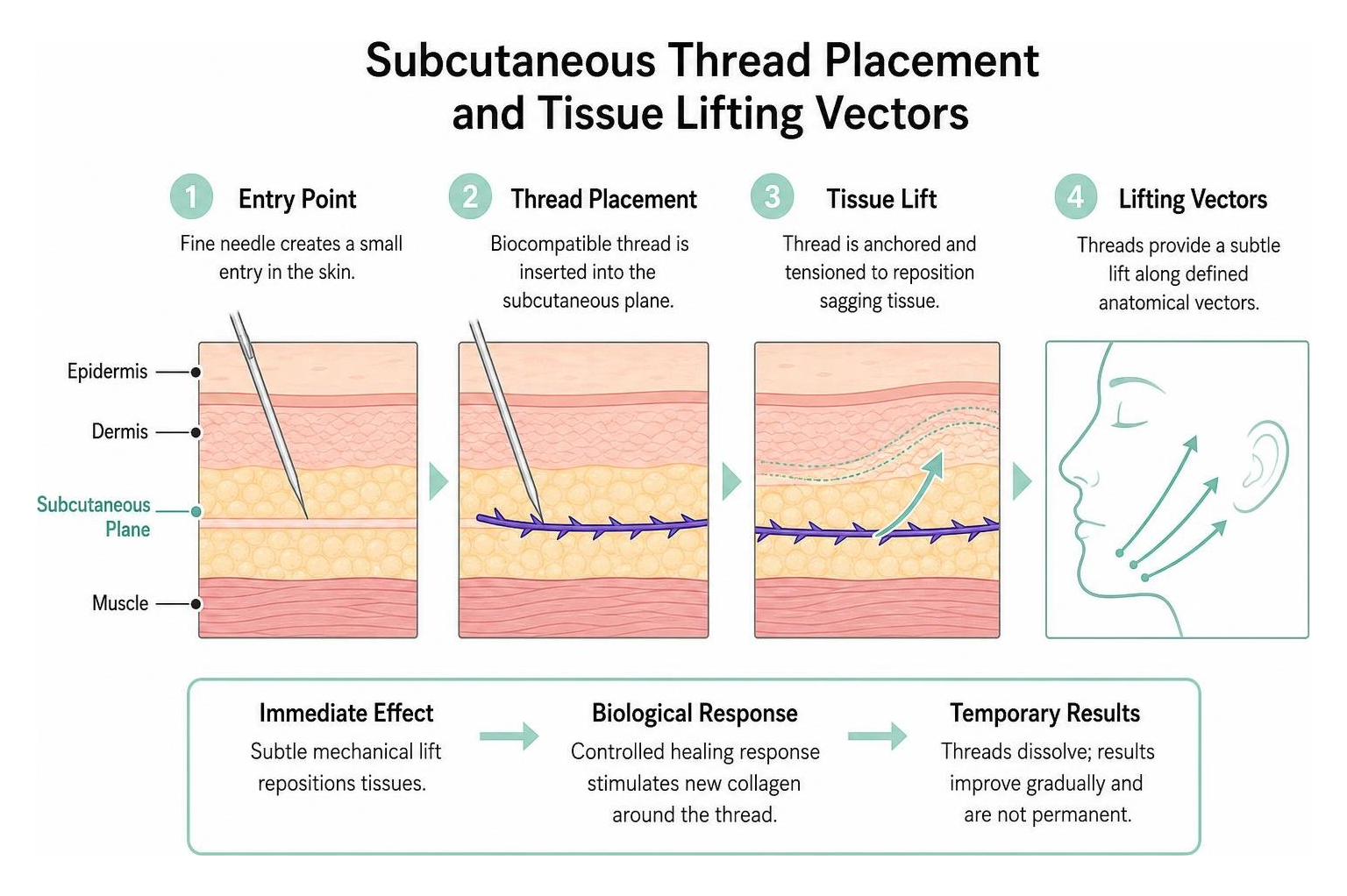
A thread lift involves inserting fine, biocompatible sutures into the subcutaneous plane just beneath the skin. These medical-grade threads physically reposition sagging tissues and anchor them along defined anatomical vectors. Once secured, they deliver an immediate, subtle mechanical lift.
Simultaneously, the presence of the suture activates a controlled biological healing response. As the material slowly dissolves, fibroblasts create new structural proteins around the thread pathway, forming a lasting network of supportive collagen.
Scientific research into the evolution of bioactive thread polymers has transitioned these treatments from permanent, high-risk sutures to modern bioabsorbable materials that naturally integrate with the body.
PDO Thread Types Explained
Medical threads are made from various biocompatible polymers, each offering unique tensile strengths, collagen-inducing profiles, and absorption rates:
- Polydioxanone (PDO): PDO is a biocompatible material commonly used in aesthetic threads. It gradually dissolves through natural hydrolysis while supporting the collagen-building response associated with thread treatment.
Beyond material composition, threads feature distinct structural designs:
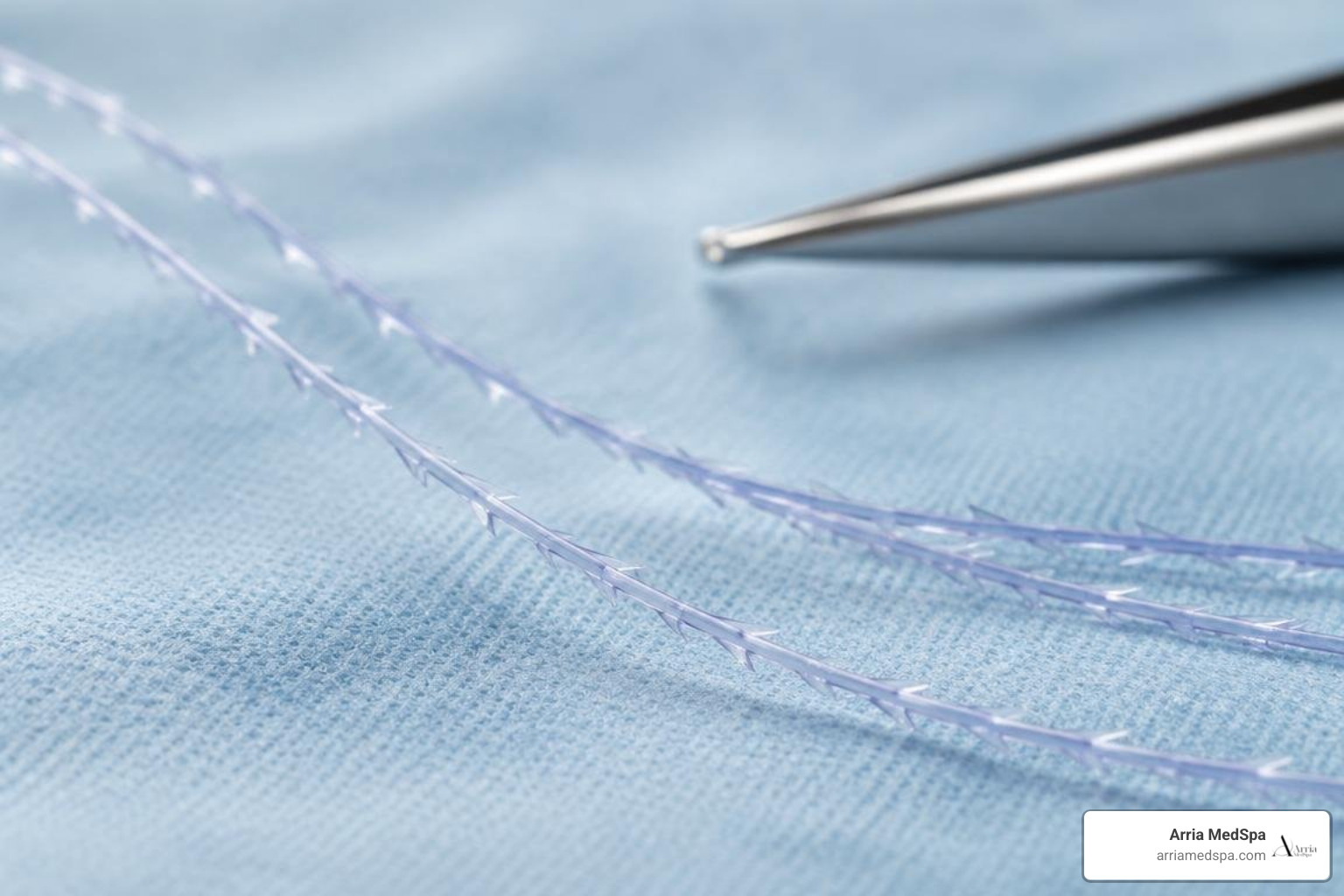
- Barbed (Cog) Threads: These sutures feature tiny directional cuts or barbs along their surface that grip the subcutaneous tissue. They mechanically lift and reposition descended tissue in areas like the lower face and jawline.
- Smooth (Mono) Threads: Smooth, non-barbed monofilaments are placed in crosshatch or fan patterns to tighten crepiness, thicken delicate skin, and smooth fine lines.
| Thread Material | Primary Aesthetic Purpose | Tissue Absorption Window | Duration of Visible Results |
|---|---|---|---|
| Polydioxanone (PDO) | Mechanical lifting and dermal firming | About 6 months | 12 to 18 months |
Target Areas for Facial and Neck Rejuvenation
Collagen threads address skin laxity across multiple regions of the face and neck:
- Mid-Face and Cheeks: Repositions descended malar fat pads to restore cheek contour and soften deep nasolabial folds.
- Jawline and Jowls: Lifts sagging lower facial tissue along the mandibular border for a cleaner jawline.
- Marionette Lines: Reduces downward shadowing at the corners of the mouth by lifting the surrounding cheek and lower-face tissue.
- Eyebrows and Temples: Provides subtle elevation to open the eye area and refresh heavy brows.
- Neck and Submentum: Tightens mild laxity beneath the chin and smooths horizontal neck bands.
Understanding How Collagen Thread Treatment Works
Collagen threads work through a dual-action mechanism: physical repositioning followed by biological regeneration.
During the procedure, a practitioner introduces the threads into the subcutaneous layer using a blunt cannula. The barbs gently engage the fibrous connective tissue network (retinacula cutis) above the muscular layer. This allows the provider to lift ptotic tissue along planned vectors, restoring a firmer contour.
As detailed in the expert consensus on absorbable suspension threads, the internal anchoring process distributes tension evenly across the treatment plane without stressing the skin surface.
Once placed, the sutures stimulate a localized restorative reaction. Fibroblasts migrate to the thread tract, depositing new Type I and Type III collagen, elastin, and extracellular matrix components. As the suture hydrolyzes, it leaves behind a supportive collagen network that maintains tissue firmness long after the original thread has dissolved.
Who Is an Ideal Candidate for Collagen Thread Treatment?
Collagen thread treatments are suitable for individuals experiencing mild to moderate skin laxity who want facial rejuvenation without surgery. Ideal candidates typically include:
- Adults between their 30s and early 60s who notice early jowl formation, softening jawlines, or cheek descent.
- Individuals seeking nonsurgical rejuvenation with minimal social downtime.
- Patients who cannot safely undergo general anesthesia due to underlying medical conditions like high blood pressure or diabetes.
Those with severe skin sagging, extensive sun damage, or very thin subcutaneous fat may achieve better results with other treatment approaches. A thorough consultation helps determine whether threads or other skin tightening treatments best fit your goals.
Key Benefits of Collagen Thread Treatment
Patients seeking non-invasive aesthetic options choose thread lifts for several reasons:
- No General Anesthesia: The procedure requires only local numbing, eliminating the risks and grogginess of general anesthesia.
- In-Office Procedure: Most appointments take under an hour, earning the treatment its nickname as a modern lunchtime lift.
- Subtle, Natural-Looking Lift: Threads gently reposition existing tissues without creating the pulled look of extensive surgery.
- Minimal Recovery: Most people return to non-strenuous work within one to two days.
- Ongoing Collagen Induction: Skin firmness and tone continue to improve over the 6 to 12 weeks following placement.
According to the clinical guide on thread lift expectations and safety from Cleveland Clinic, realistic expectations regarding subtle contouring and temporary longevity are key to patient satisfaction.
Step-by-Step Procedure, Recovery, and Longevity
Understanding the treatment steps and recovery timeline helps you prepare for a comfortable experience.
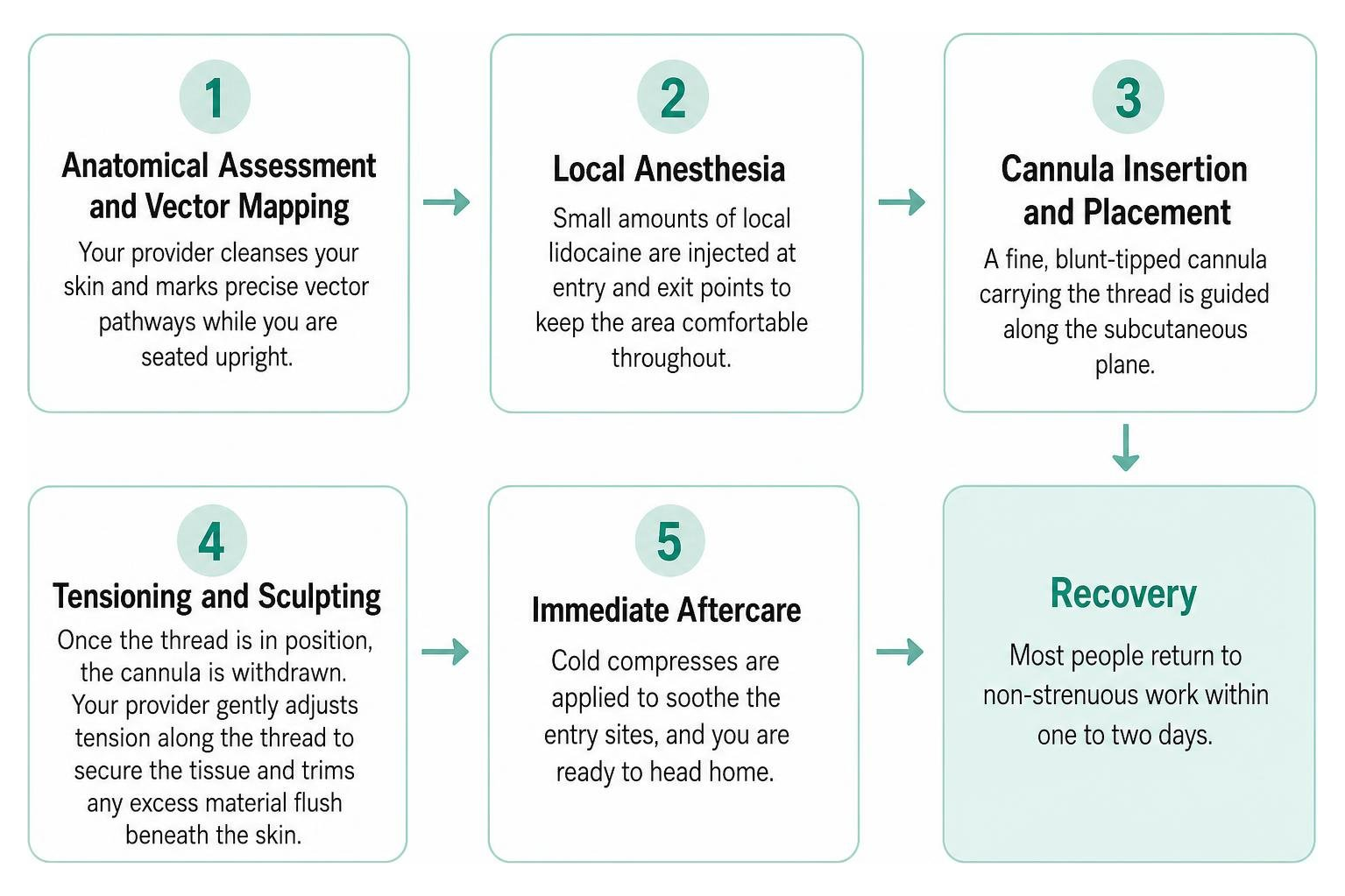
- Anatomical Assessment and Vector Mapping: Your provider cleanses your skin and marks precise vector pathways while you are seated upright.
- Local Anesthesia: Small amounts of local lidocaine are injected at entry and exit points to keep the area comfortable throughout.
- Cannula Insertion and Placement: A fine, blunt-tipped cannula carrying the thread is guided along the subcutaneous plane.
- Tensioning and Sculpting: Once the thread is in position, the cannula is withdrawn. Your provider gently adjusts tension along the thread to secure the tissue and trims any excess material flush beneath the skin.
- Immediate Aftercare: Cold compresses are applied to soothe the entry sites, and you are ready to head home.
Reviewing essential PDO thread lift safety guidelines ensures you follow proper at-home care to minimize bruising and support healing.
- Days 1 to 2: Expect mild swelling, tenderness, and minor bruising. Sleep elevated on your back, keep your skin clean, and avoid makeup for 24 to 48 hours.
- Week 1: Avoid exaggerated facial expressions, hard or chewy foods, and strenuous physical exertion.
- Weeks 2 to 4: Normal exercise routines may be resumed gradually. Avoid deep facial massages, dental cleanings, and high-heat environments like saunas for about a month.
Combining Threads with Fillers and Botox
Because facial aging affects bone structure, muscle tone, and skin elasticity simultaneously, combining treatments often yields the most balanced, natural-looking results.
Achieving full face rejuvenation without surgery often pairs structural threads with targeted neuromodulators and hyaluronic acid fillers. Dermal fillers restore lost volume in deeper fat compartments and support retaining ligaments, while threads lift the overlying superficial layers.
When pairing threads with neuromodulators like Botox, providers typically inject the neurotoxin roughly an hour after thread placement or during a separate visit. This prevents involuntary facial muscle movements from pulling on newly anchored threads while they settle. In clinical evaluations combining PDO threads and Botulinum Toxin A (Aliyeva, 2025), 90% of patients reported improved skin texture and brightness at four months, with 100% expressing overall satisfaction with their rejuvenated appearance.
Longevity and Results: What to Expect Over 12 to 24 Months
While the immediate lift is visible right away, initial post-treatment swelling typically settles within 3 to 5 days. Over the next 6 to 12 weeks, skin firmness and tone continue to improve as new collagen forms along the thread channels.
Although standard PDO threads dissolve via natural hydrolysis over roughly 6 months, the structural collagen matrix left behind supports the tissue for 12 to 18 months. In a 24-month clinical study evaluating mid-face contouring (Wan et al., 2025), 3D volumetric analysis demonstrated that combining suspension threads with dermal fillers produced measurable improvements in facial width and cheek projection that lasted up to two years. Most patients schedule an annual maintenance session to preserve their collagen support.
Collagen Thread Lift and Other Nonsurgical Treatments
Understanding how thread lifts compare to other nonsurgical options helps clarify which treatment fits your specific concerns:
| Treatment Modality | Primary Mechanism | Best Suited For | Typical Longevity | Relative Downtime |
|---|---|---|---|---|
| Collagen Thread Lift | Subcutaneous tissue suspension and collagen stimulation | Mild-to-moderate laxity, jowls, mid-face sagging | 12 to 18 months | 2 to 5 days of mild swelling or bruising |
| Dermal Fillers | Hyaluronic acid volumetric replenishment | Hollow temples, sunken cheeks, deep folds | 9 to 18 months | 1 to 2 days of localized swelling |
| Neuromodulators (Botox) | Dynamic muscle relaxation | Forehead lines, crow’s feet, frown lines | 3 to 4 months | Immediate return to activity is common |
Frequently Asked Questions About Collagen Threads
Is the procedure painful, and what anesthesia is used?
The procedure is designed to be comfortable. Providers apply a topical numbing cream followed by local lidocaine injections at the entry points. Because the blunt cannula travels through the subcutaneous layer, most patients feel gentle pressure or light tugging rather than sharp pain. Mild tenderness or tightness over the first few days is easily managed with over-the-counter pain relievers and cold compresses.
What are the main risks, and what signs require medical attention?
When performed by an experienced medical professional, complications are uncommon. Typical temporary side effects include mild swelling, localized bruising, and a feeling of tightness that subsides within a week.
Less common issues include minor asymmetry, temporary skin dimpling, or a palpable thread end. These can often be adjusted during a follow-up visit.
Contact your provider promptly if you notice signs that warrant medical evaluation:
- Spreading redness, warmth, or persistent pain around an entry site.
- Visible thread extrusion through the skin surface.
- Sudden or worsening swelling after the initial 48 hours.
- Fever or localized fluid collection.
What should you look for in a qualified thread provider?
Safe, natural-looking results rely on your provider’s anatomical knowledge and technique. Look for:
- Medical Licensure and Oversight: Clinics operating under board-certified surgical or medical oversight.
- Dedicated Anatomical Training: In-depth knowledge of facial nerve pathways, blood vessels, and retaining ligaments.
- Sterile Clinical Setting: Strict adherence to sterile procedure protocols to prevent infection.
- Personalized Vector Planning: Tailored treatment mapping rather than a one-size-fits-all approach.
Restoring Natural Firmness at Arria MedSpa
A well-executed collagen thread treatment offers an effective, minimally invasive way to lift sagging facial contours, stimulate natural collagen, and refresh your appearance without surgery. While threads provide a more subtle result than some patients may want, they offer an appealing option for individuals with mild to moderate laxity who want subtle rejuvenation with minimal downtime.
Arria MedSpa is a state-of-the-art facility in Montclair, NJ, serving clients across Essex County and nearby communities including Bloomfield, Glen Ridge, Verona, Cedar Grove, Clifton, and Nutley. Under board-certified surgeon oversight, our team focuses on balanced, natural-looking results tailored to your unique facial anatomy.
If you are ready to learn how absorbable threads can restore firmness and definition to your face and neck, schedule a personalized PDO thread consultation with our aesthetic team today.