
When Acne Won’t Quit: Why More People Are Turning to Laser Treatment
Acne laser treatment has become one of the most effective options available today for people who have tried creams, antibiotics, and other therapies — and still can’t get clear skin.
Quick answer: What is acne laser treatment?
| What it is | A minimally invasive procedure using focused light energy to reduce acne at its source |
|---|---|
| How it works | Targets oil glands, kills acne-causing bacteria, and calms inflammation |
| Who it’s for | Anyone with mild to severe acne, especially those who haven’t responded to standard treatments |
| How many sessions | Typically 3–6 sessions depending on the technology used |
| Results | Visible improvement within weeks; some lasers show continued results for up to 2 years |
| Side effects | Usually mild — temporary redness and swelling that resolve within days |
Acne is incredibly common. Up to 50 million Americans deal with it, and 85% of people between ages 12 and 24 experience it at some point. But it doesn’t stop at your teenage years — many women in their 30s, 40s, and beyond still struggle with breakouts that affect their confidence and daily life.
The problem is that most standard treatments — topical creams, oral antibiotics, even Accutane — come with real drawbacks. Side effects, strict compliance requirements, and results that don’t always last make them frustrating for many patients.
That’s where modern laser technology changes the picture. Instead of masking symptoms, today’s laser treatments target the root causes of acne — the overactive oil glands, bacteria, and inflammation that keep breakouts coming back.
I’m Stephanie J. Rosen, PA-C, and I’ve been working in plastic surgery and dermatology with a focus on cosmetic medicine since 2005, including hands-on experience with advanced acne laser treatment options. In the sections below, I’ll walk you through everything you need to know — from how different lasers work to what kind of results you can realistically expect.
Understanding Acne Vulgaris and Why Traditional Treatments Fail
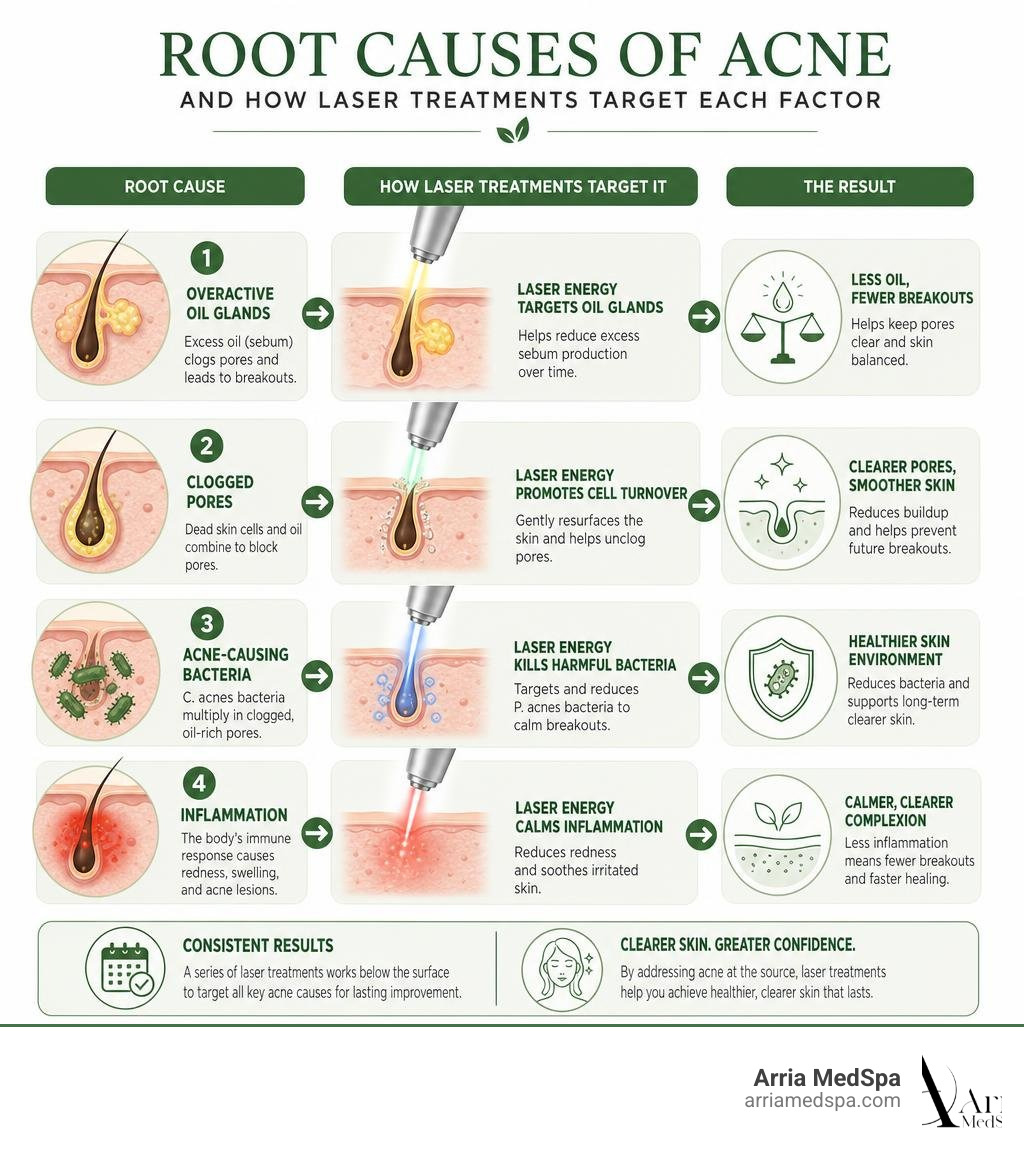
Acne vulgaris is a complex inflammatory skin condition that begins deep within our hair follicles. To truly understand why traditional remedies often fall short, we have to look at the biological perfect storm that causes breakouts in the first place.
Our skin naturally produces sebum, an oily substance designed to keep our skin hydrated and protected. However, when hormonal shifts or genetics cause our sebaceous glands to go into overdrive, they produce far too much oil. This excess sebum mixes with dead skin cells that fail to shed properly, creating a sticky plug that clogs our pores. Inside these oxygen-depleted, oil-rich clogged pores, a common skin bacteria known as Cutibacterium acnes (C. acnes) begins to multiply rapidly. This bacterial overgrowth triggers an immune response, leading to the painful red bumps, pustules, and deep nodules we recognize as inflammatory acne.
Traditional medical treatments try to address these steps, but they come with significant roadblocks. Topical retinoids and benzoyl peroxide are often the first line of defense, but they require strict daily compliance. In fact, clinical studies show that up to 45% of patients abandon topical therapies before giving them an adequate trial, with 62% citing a lack of visible response and 38% stopping due to frustrating side effects like severe dryness, peeling, and skin irritation. If you would like to explore some of these foundational approaches, you can read our guide on Achieving Clear Skin: How to Get Rid of Acne.
Oral antibiotics are another common prescription, but they are not designed for long-term use. Overusing them has contributed to a rise in global antibiotic resistance, making the bacteria harder to treat over time. For severe, stubborn cases, oral isotretinoin (commonly known as Accutane) is often considered the heavy hitter. While highly effective, isotretinoin comes with a long list of potential side effects, including extreme dryness, joint pain, mood changes, and severe birth defect risks that require strict monthly blood tests and regulatory monitoring.
Because of these limitations, many patients find themselves caught in a frustrating loop of temporary clearing followed by sudden breakouts. To see how these options compare to clinical procedures, take a look at our breakdown of the Best Acne Removal Treatments.
How Modern Acne Laser Treatment Works to Clear Your Skin
Modern acne laser treatment offers a completely different pathway to clear skin. Instead of relying on daily chemical applications or systemic medications, lasers use the principles of selective photothermolysis to target the root causes of acne directly within the deeper layers of the skin.
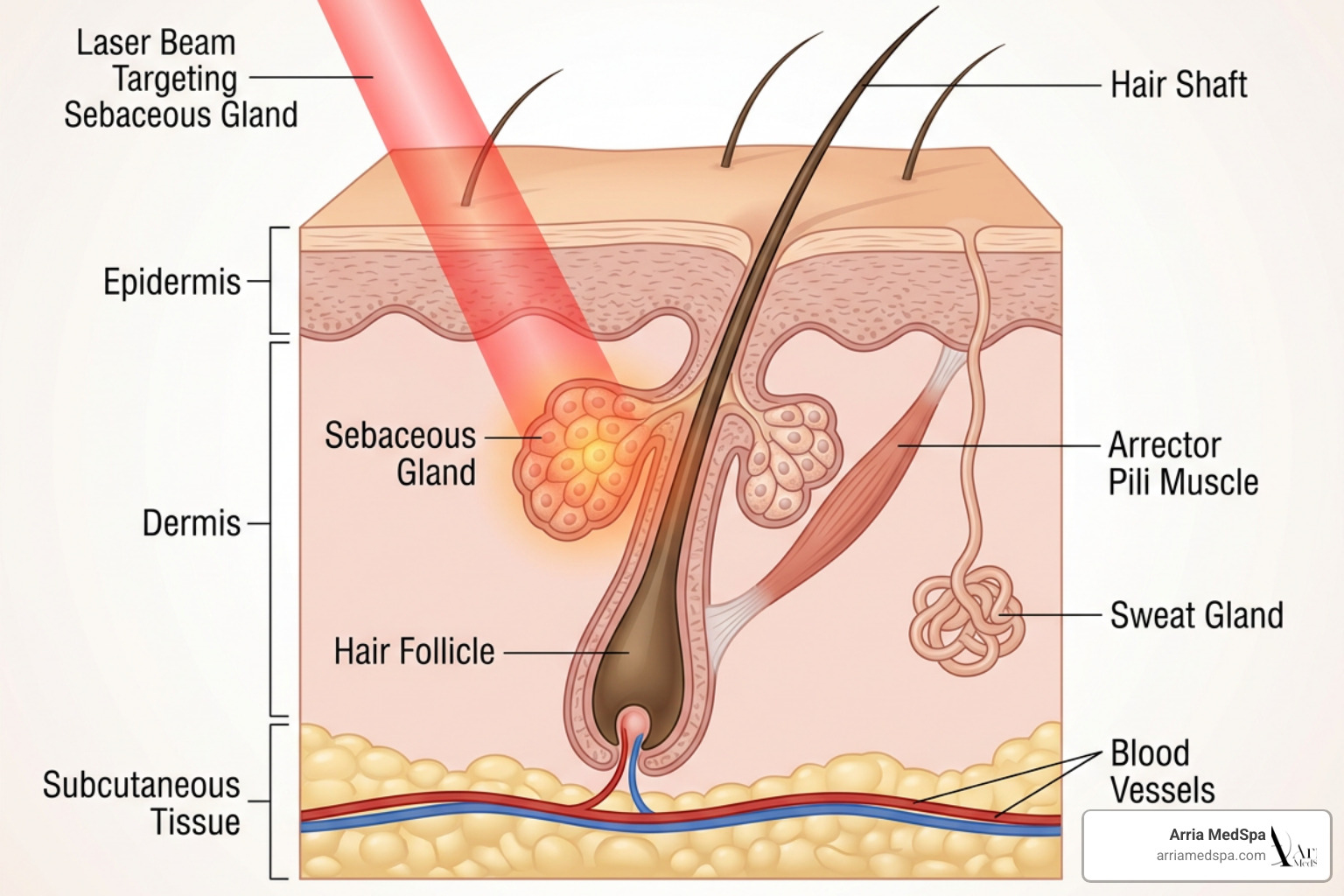
Selective photothermolysis is a scientific process where specific wavelengths of light are absorbed by target structures (chromophores) in the skin without damaging the surrounding healthy tissue. When it comes to acne, different laser wavelengths are calibrated to target either the blood vessels feeding the inflammation, the pigments inside the acne-causing bacteria, or the lipids within the overactive sebaceous glands themselves.
When a laser targets the sebaceous glands, the light energy converts to gentle heat, safely shrinking the overactive oil glands. By reducing the size and activity of these glands, we drastically cut down the skin’s oil production. Less oil means fewer clogged pores, which ultimately starves the C. acnes bacteria of its primary food source.
Additionally, certain wavelengths of laser light generate a thermal reaction that directly destroys the bacteria living inside the pores. This immediate reduction in bacterial colonization calms active inflammation almost instantly, helping painful red bumps flatten and heal much faster.
Beyond clearing active breakouts, laser energy penetrates into the dermis to stimulate the skin’s natural healing response. This process triggers the production of fresh collagen and elastin, which helps smooth out uneven skin texture and reduces the early signs of acne scarring. To learn more about how we use these advanced light energies to transform your complexion, explore our comprehensive overview of Laser Treatments.
Comparing the Best Laser and Light-Based Technologies
Not all light-based therapies are created equal. Depending on your specific skin type, the severity of your breakouts, and whether you are also dealing with post-acne marks, different technologies may be recommended.
| Laser / Light Type | Primary Target | Best For | Typical Results / Stats |
|---|---|---|---|
| Blue & Red LED Light | C. acnes bacteria & surface inflammation | Mild, superficial pimples; sensitive skin | 55% overall reduction in acne lesions after a short series of sessions |
| Intense Pulsed Light (IPL) | Pigment, redness, and superficial bacteria | Mild to moderate inflammatory acne and red marks | 79% reduction in noninflammatory and 74% in inflammatory lesions 1 month post-treatment |
| Photodynamic Therapy (PDT) | Sebaceous glands (via a topical photosensitizer) | Moderate to severe cystic acne | 50% fewer spots at 4 weeks; 72% reduction at 12 weeks post-treatment |
| Pulsed Dye Laser (PDL) | Hemoglobin in blood vessels | Red, highly inflamed acne and red post-acne scars | 53% reduction in total lesions after a single treatment session |
| Fractional CO2 Laser | Water in skin tissue (creates micro-channels) | Active inflammatory acne and deep acne scars | 59.3% reduction in active lesions after three low-energy sessions |
Blue and red light therapies are gentle, non-thermal options. Blue light specifically targets the porphyrins produced by C. acnes bacteria, causing a reaction that destroys the bacteria, while red light penetrates slightly deeper to calm active redness and speed up healing.
For patients dealing with both active breakouts and the lingering red or dark marks they leave behind, dual-wavelength systems offer a highly effective solution. Clinical research published in the journal of Efficacy and Safety of Solid-state Dual-wavelength Lasers for the Treatment of Moderate-to-severe Inflammatory Acne in Asian Populations highlights how combining a 589 nm wavelength (which targets redness and blood vessels) with a 1319 nm wavelength (which heats the deeper dermis to reduce oil production) can clear active acne while simultaneously lightening post-inflammatory hyperpigmentation.
Even traditional resurfacing lasers are being reimagined for active breakouts. As detailed in the study Ablative fractional laser treatment for the clinical improvement of acne vulgaris: A case series, using low-energy, low-density fractional CO2 lasers can safely clear stubborn inflammatory lesions. By creating microscopic channels in the skin, this treatment helps clear out stubborn microcomedones and triggers rapid tissue remodeling, preventing scars from forming in the first place.
The 1726 nm Laser: A Game-Changer for Stubborn Acne
The introduction of the 1726 nm laser wavelength represents one of the most exciting breakthroughs in modern aesthetic dermatology. Unlike older lasers that heat the water in our skin tissue non-selectively, the 1726 nm wavelength specifically targets sebum.
This wavelength matches the exact infrared absorption peak of human sebum. This means that when the laser is applied to the skin, the energy passes safely through the surface layers and is preferentially absorbed by the sebaceous glands deeper in the dermis. This selective heating allows us to precisely damage or destroy the overactive sebocytes (the cells that produce oil) without causing collateral damage to the surrounding skin.
The clinical data supporting this technology is incredibly promising. According to a 2023 open-access review in the Journal of Cosmetic Dermatology, the 1726 nm laser is FDA-approved for treating mild, moderate, and severe inflammatory acne vulgaris.
Unlike topical creams that only work while you use them, the 1726 nm laser offers long-term disease modification. Clinical trials show that acne resolution begins within the very first month after treatment, and patients continue to see progressive skin clearing for up to two years beyond their final session. In fact, long-term follow-ups have documented up to a 97% reduction in inflammatory lesions at the two-year mark, providing a level of durable remission that was previously only achievable with oral isotretinoin.
What to Expect During and After Your Laser Sessions
Preparing for your acne laser treatment is simple, but following a few key guidelines will help ensure you get the safest, most effective results.
Before your session, you will want to avoid direct sun exposure and stop using any harsh active ingredients — such as retinol, salicylic acid, or glycolic acid — for about three to five days. If you are currently taking oral acne medications, make sure to let your provider know during your consultation, as some prescriptions can make your skin highly sensitive to light.
During the procedure, your skin will be thoroughly cleansed. To keep you comfortable, modern laser systems utilize advanced built-in contact cooling mechanisms. These systems chill the surface of your skin immediately before, during, and after each laser pulse, protecting the epidermis and minimizing any stinging or prickling sensations. Most patients describe the feeling as a quick hot snap, which is highly tolerable and does not require topical numbing creams.
Immediately after your session, your skin will likely look and feel like you have a mild sunburn. This temporary redness (erythema) and slight swelling (edema) are completely normal and typically resolve within 12 to 48 hours.
In the week following your treatment, some patients experience a mild, temporary acne “purge.” This happens because the laser’s thermal energy speeds up cellular turnover, pushing existing deep-seated congestion to the surface of the skin. Do not pick or squeeze these spots; they will heal much faster than a typical breakout. Keep your skincare routine incredibly simple: use a gentle, non-comedogenic cleanser, a soothing moisturizer, and apply a broad-spectrum SPF 30+ sunscreen daily to protect your recovering skin from the sun.
Frequently Asked Questions About Laser Acne Therapy
Who is a good candidate for acne laser treatment?
Most individuals struggling with persistent mild, moderate, or severe inflammatory acne are excellent candidates for laser therapy. This is especially true for those who have not seen success with traditional topical creams or oral antibiotics, or those who want to avoid the systemic side effects associated with oral retinoids. Because modern lasers like the 1726 nm wavelength selectively target oil glands rather than skin pigment, they are exceptionally safe and effective for all Fitzpatrick skin types, including darker skin tones that were historically at a higher risk for pigmentary changes.
How many sessions of acne laser treatment are needed for clear skin?
While some initial improvement is often visible within the first few weeks, achieving optimal, long-lasting results typically requires a series of treatments. Most advanced protocols recommend three to four sessions spaced roughly two to four weeks apart. This allows us to progressively target the sebaceous glands during different phases of their activity. Once your initial series is complete, the structural changes to your oil glands are long-lasting, though some patients choose to schedule a single maintenance session once or twice a year to keep their skin looking its absolute best.
Are there any side effects or risks associated with lasers?
When performed by an experienced, licensed professional, the risks associated with acne lasers are remarkably low. The most common side effects are temporary redness, mild swelling, and occasional dryness or purging, all of which naturally resolve within a few days. Rare complications like blistering, temporary pigment changes (hyperpigmentation), or scarring are highly uncommon, particularly with modern devices that utilize advanced epidermal cooling technology to keep the surface of your skin completely safe throughout the procedure.
Start Your Journey to Clear Skin with Arria MedSpa
At Arria MedSpa, located in the heart of Montclair, NJ, we believe that achieving clear skin shouldn’t come at the cost of your peace of mind or your skin’s overall health.
Our practice is built on a foundation of medical excellence. With dedicated, board-certified surgeon oversight, we combine the safety and precision of a clinical environment with a warm, welcoming boutique experience. We know that no two complexions are exactly alike, which is why we never believe in a one-size-fits-all approach to acne.
Our highly trained team will carefully evaluate your unique skin type, your acne history, and your personal goals to design a customized treatment plan that delivers beautiful, natural-looking results. Whether you are dealing with active, painful breakouts or looking to smooth out post-acne marks, we are here to guide you every step of the way.
We proudly serve patients throughout our local Essex County communities and surrounding areas, including Bloomfield, Glen Ridge, Verona, Cedar Grove, Clifton, Nutley, Little Falls, and West Orange. If you are ready to experience the life-changing benefits of advanced light therapy, we invite you to read more about The Effectiveness of Laser Treatments for Acne and schedule your personalized consultation with us today.