Those Vertical Lip Lines Are Treatable — Here’s What Actually Works
Laser resurfacing for lip lines is one of the most effective ways to smooth the fine vertical wrinkles that appear around the mouth. But with so many options available, knowing which treatment fits your goals can feel overwhelming.
Quick answer: Which laser is best for lip lines?
| Treatment | Best For | Downtime | Longevity |
|---|---|---|---|
| Ablative CO2 laser | Deep, stubborn lines | 7-10 days | 2-5 years |
| Erbium laser | Moderate lines, all skin types | 5-7 days | 1-3 years |
| Fractional laser (e.g. Fraxel) | Mild to moderate lines | 3-5 days | 1-3 years |
| Non-ablative laser | Early lines, minimal downtime | 1-2 days | Months (series needed) |
Results vary by skin type, lifestyle, and how many sessions you complete. Most patients see 50-75% improvement after a full treatment series.
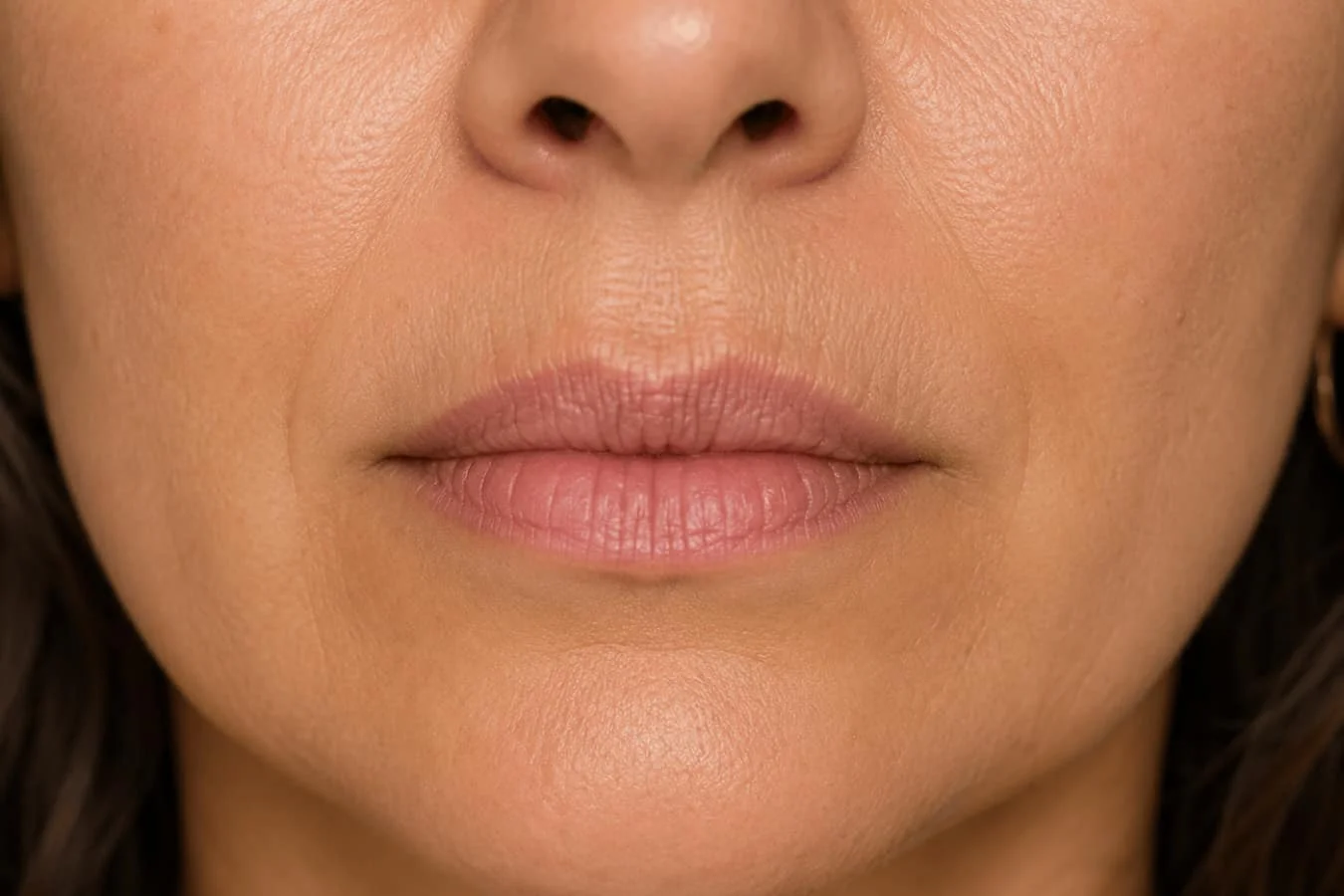
Those small vertical lines above the upper lip — sometimes called smoker’s lines or lipstick lines — are one of the most common aging concerns among women. They tend to deepen over time, and once they’re etched in, creams alone rarely make a visible dent.
Laser resurfacing works differently. Instead of just masking the problem, it triggers your skin to rebuild collagen from within — addressing the root cause of the wrinkles, not just their appearance.
This guide breaks down every major laser option, compares them to alternatives like fillers and Botox, and gives you a clear picture of what to expect before, during, and after treatment.
I’m Stephanie J. Rosen, a board-certified Physician Assistant with over 20 years of experience in plastic surgery and dermatology, including hands-on work with laser resurfacing for lip lines and a wide range of skin rejuvenation treatments. In the sections ahead, I’ll walk you through everything you need to make a confident, informed decision.
Understanding Lip Lines: Why Do They Form?
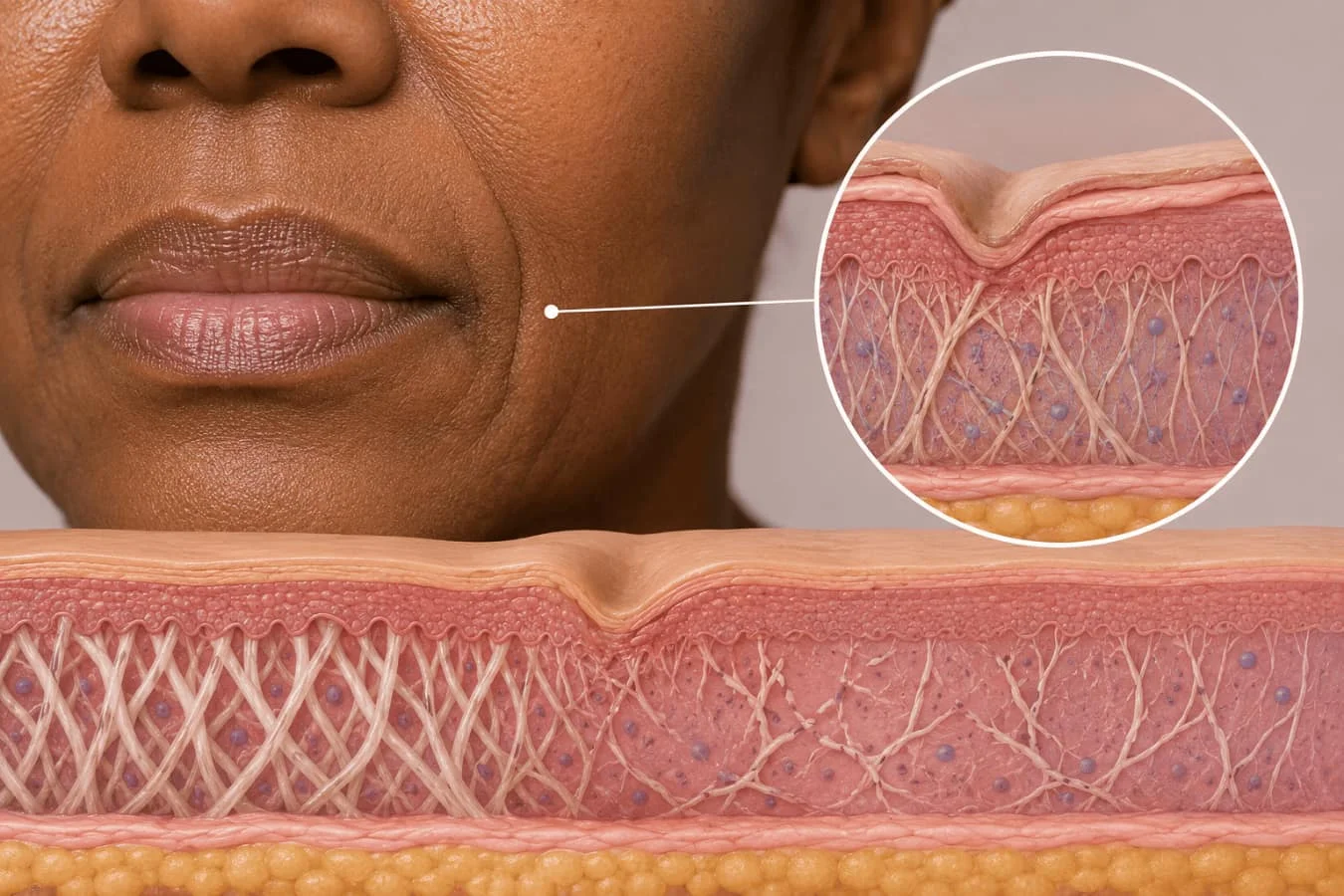
Before we dive into how to erase them, we have to understand why these stubborn lines appear in the first place. The skin around your mouth is uniquely susceptible to aging. It is incredibly thin, contains fewer sebaceous (oil) glands than the rest of your face, and is constantly in motion.
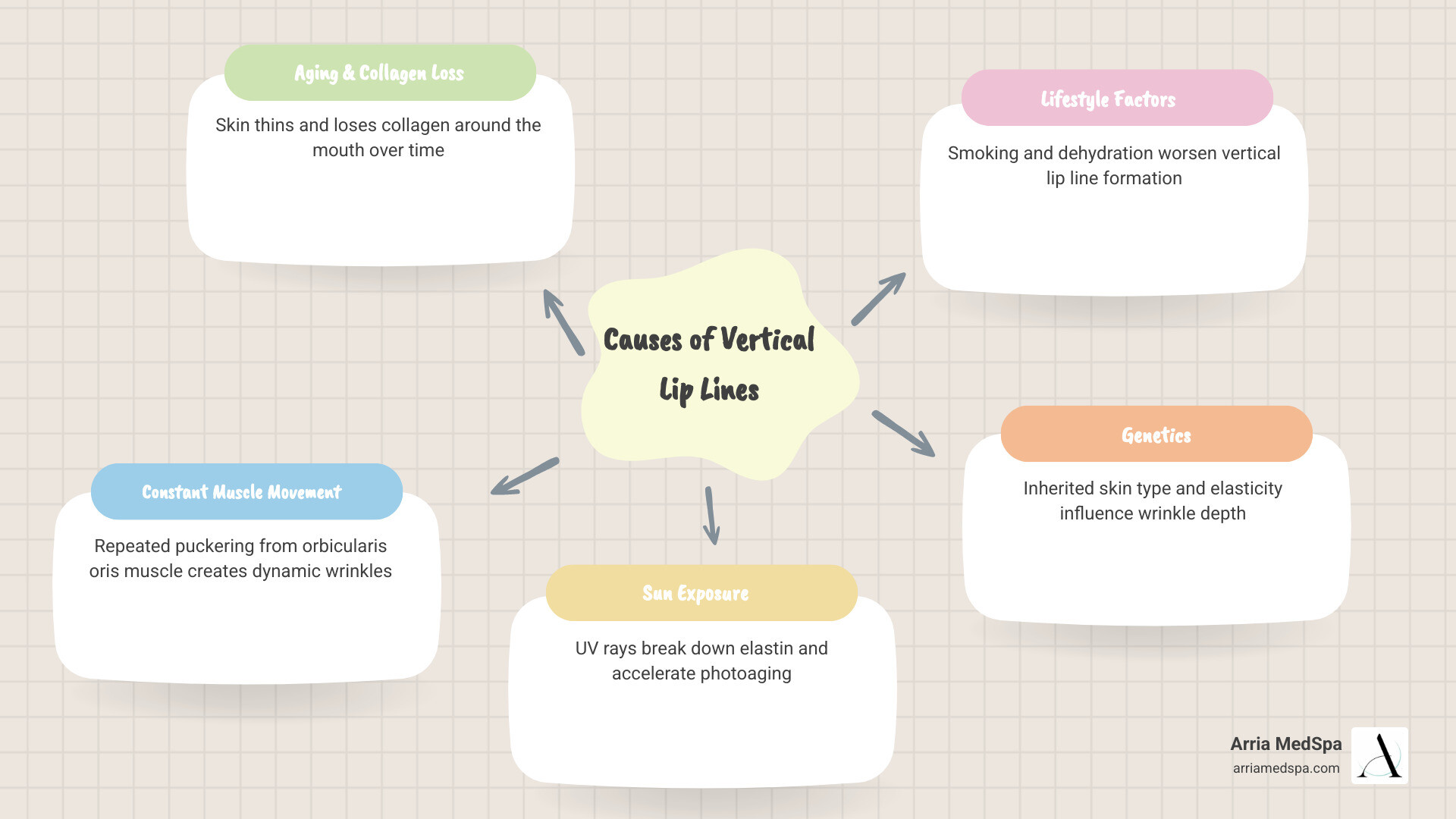
There are several primary factors that drive the formation of perioral wrinkles:
- Repetitive Muscle Movement: Every time you speak, smile, laugh, eat, or sip through a straw, you use a circular muscle called the orbicularis oris. This muscle acts like a purse-string, drawing the skin inward. Over years of repetitive puckering, the skin creases. Initially, these are “dynamic” lines (only visible when moving), but over time they become “static” lines (permanently etched into the skin even at rest).
- Loss of Collagen and Elastin: Collagen is the structural scaffolding of your skin, while elastin allows it to snap back into place. As we age, our natural production of both proteins drops dramatically. Without this internal support, the skin becomes crepey and prone to deep creasing.
- Sun Exposure (Photoaging): UV radiation is the ultimate accelerator of skin aging. In fact, sun exposure is responsible for about 80% of visible skin aging changes, including the development of wrinkles around the mouth. UV rays generate free radicals that actively break down your existing collagen and elastin fibers.
- Smoking: Frequently called “smoker’s lines,” these wrinkles are heavily worsened by smoking. Not only does the physical act of holding a cigarette mimic the repetitive puckering motion, but the toxins in tobacco smoke restrict blood flow to the skin and starve it of oxygen, accelerating premature aging.
- Genetics and Anatomy: Your underlying bone structure, natural skin thickness, and genetic predisposition dictate how early and how deeply these lines will form.
To explore the cellular mechanics of this process further, you can read the Scientific research on lip aging and esthetics, which details how aging alters lip volume, texture, and tissue thickness.
Why Laser Resurfacing Lip Lines is the Gold Standard for Perioral Aging
While topical creams and serums are excellent for daily maintenance, they cannot penetrate deeply enough to remodel the dermal layer where deep wrinkles live. This is why laser resurfacing lip lines is widely considered the gold standard for perioral rejuvenation.
Lasers work by delivering targeted beams of thermal energy into the skin. This controlled micro-injury does two things: it vaporizes or heats damaged outer layers of skin to reveal fresh tissue underneath, and it triggers a robust wound-healing response. Your body rushes to produce fresh, organized collagen and elastin fibers, filling in the wrinkles from the inside out.
To learn more about how light-based therapies can transform your complexion, check out our guide on More info about laser treatments and discover how we customize these technologies. You can also Learn about 3 types of laser treatments to understand which wavelengths work best for different signs of aging.
Ablative vs. Non-Ablative Laser Resurfacing Lip Lines
When choosing a laser treatment, the most important decision is whether to go with an ablative or non-ablative approach.
- Ablative Lasers (CO2 and Erbium): These are the heavy hitters. Ablative lasers physically remove the outer layer of skin (epidermis) while heating the deeper dermis.
- CO2 Lasers: Historically the gold standard for deep, etched-in vertical lines. It delivers the most dramatic, single-session results but requires 7-10 days of intensive downtime. For an in-depth look, see our article on CO2 Laser Resurfacing for Skin Rejuvenation.
- Erbium Lasers: A slightly gentler ablative option that is highly precise and carries a lower risk of pigment changes, making it excellent for moderate wrinkles and a wider range of skin tones.
- Fractional Ablative (e.g., Fraxel): Instead of treating the entire skin surface, fractional lasers create microscopic “columns” of treatment, leaving the surrounding tissue intact. This drastically speeds up healing while delivering impressive results.
- CoolPeel CO2: A modern breakthrough that delivers the benefits of CO2 laser resurfacing without the traditional downtime. To see how this technology works, read about the CoolPeel CO2 Laser Treatment.
- Non-Ablative Lasers: These lasers leave the surface of the skin completely intact, heating only the underlying dermal tissue to stimulate collagen. While you won’t experience raw, peeling skin, you will need a series of 3 to 6 sessions to see optimal results. This approach is ideal for younger patients or those who cannot afford any downtime. For instance, you can review this Research on non-ablative diode lasers for lips to see how non-invasive wavelengths can safely enhance lip texture.
What to Expect During Your Laser Resurfacing Lip Lines Session
A typical laser session for the perioral area is straightforward and takes between 30 to 60 minutes.
First, we thoroughly cleanse the skin and apply a strong topical numbing cream. Because the mouth is a highly sensitive area, we may also perform a local dental block (similar to what you receive at the dentist) to ensure you are completely comfortable during deeper ablative treatments.
During the procedure, you will feel a warm, snapping sensation as the laser passes over the skin. If we are using a fractional or non-ablative system, the discomfort is very mild. For deep CO2 treatments, you may feel a more intense heat, which we manage with cooling air devices. To gain a broader perspective on your choices, you can Explore different skin resurfacing methods to see how we tailor each session to your comfort and aesthetic goals.
How Laser Resurfacing Compares to Alternative Lip Treatments
Patients often ask us how laser resurfacing lip lines compares to other popular cosmetic treatments. The truth is, the best results often come from combining therapies, as they target different aspects of the aging process.
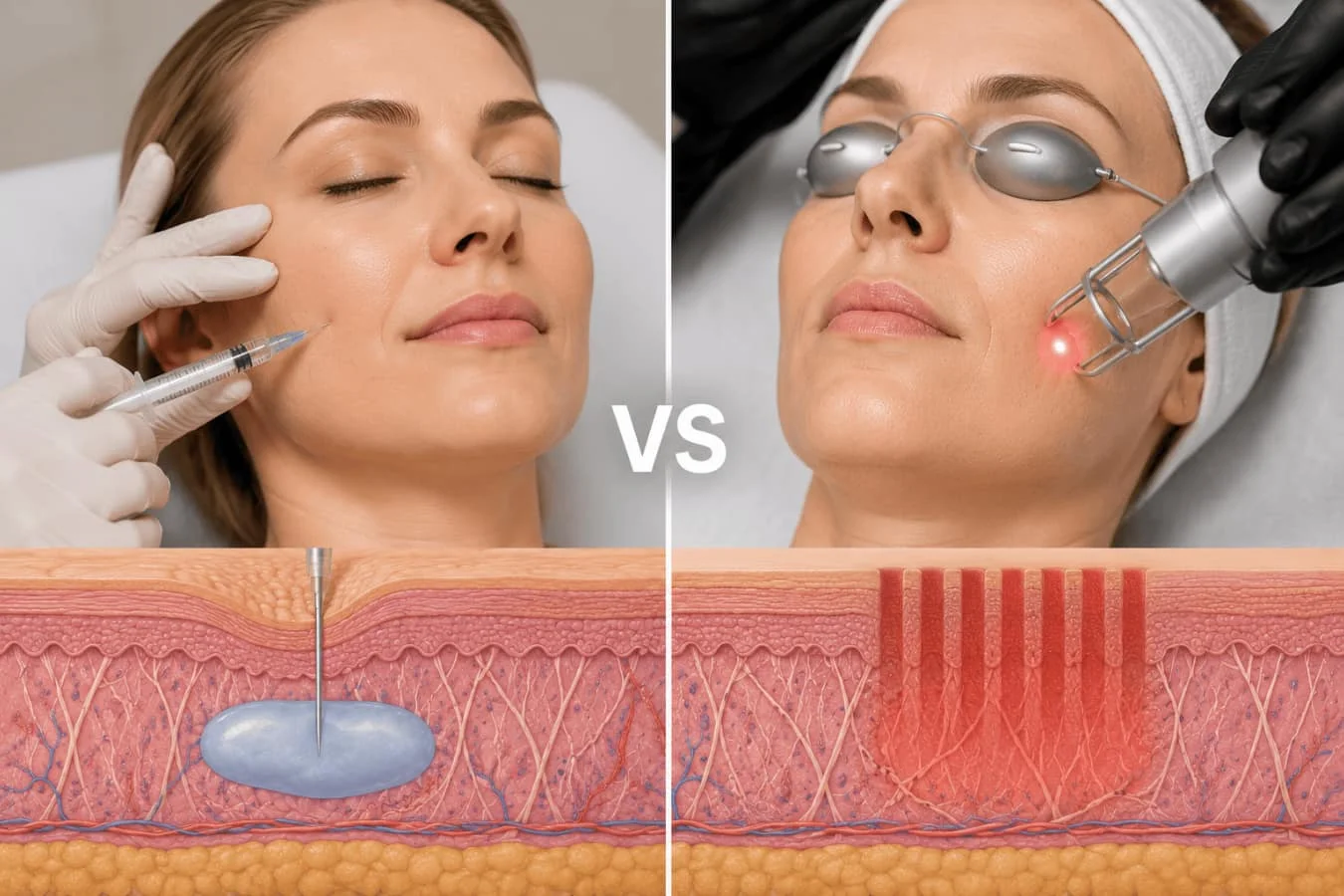
Here is how lasers stack up against the alternatives:
- Dermal Fillers (e.g., Juvederm Volbella, Restylane Kysse): Fillers are made of hyaluronic acid and are injected directly into the lines or along the lip border. They provide immediate volume and hydration, smoothing out lines instantly. While fillers are fantastic for restoring lost volume, they do not change the actual texture of the skin and must be repeated every 6 to 12 months.
- Botox & Neuromodulators: Botox relaxes the orbicularis oris muscle, reducing the repetitive puckering that causes dynamic lines. It is incredibly effective as a preventative tool and softens early-stage lines, but it cannot erase deep, static wrinkles that are already etched into the skin at rest. Results last 3 to 4 months.
- Microneedling & RF Microneedling: These treatments use tiny needles to create mechanical micro-injuries, stimulating collagen. RF microneedling adds radiofrequency heat for deeper tightening. While highly effective and safe for summer months (even on tanned skin), they generally require more sessions than an ablative laser to achieve the same level of improvement on deep wrinkles.
- Chemical Peels: Peels exfoliate the outer layers of skin using acids. Light peels improve radiance, while deep phenol peels can address deep wrinkles but carry a lengthy, intense recovery process and a higher risk of pigment loss.
For a side-by-side comparison, review the table below:
| Treatment | How It Works | Best For | Typical Longevity | Recovery Time |
|---|---|---|---|---|
| Laser Resurfacing | Thermal collagen remodeling | Deep structural wrinkles & crepey skin texture | 1 – 5 years (depending on laser type) | 1 – 10 days |
| Dermal Fillers | Physical volume replacement | Restoring lip border & filling deep hollows | 6 – 12 months | 24 – 48 hours (mild swelling/bruising) |
| Botox | Temporary muscle relaxation | Preventing dynamic puckering lines | 3 – 4 months | None |
| Microneedling | Mechanical collagen induction | Mild lines, preventative care, safe for all skin tones | 3 – 6 months (requires maintenance) | 1 – 2 days |
If you are dealing with particularly stubborn, deeply set wrinkles, you can read these Expert opinions on deep vertical lip line procedures to see why leading plastic surgeons frequently recommend combining deep laser resurfacing with structural support.
Recovery, Aftercare, and Preparing for Your Treatment
Your recovery experience depends entirely on the type of laser used.
- For Non-Ablative Lasers: Expect 1 to 2 days of mild redness and swelling, similar to a light sunburn. You can apply makeup almost immediately and return to your normal routine.
- For Ablative Lasers (CO2/Erbium): Expect a 7 to 10-day recovery window.
- Days 1-3: The skin will be red, swollen, and warm. It may weep or ooze slightly.
- Days 4-7: The treated skin will begin to turn brown and peel or flake off. It is crucial not to pick or scrub this skin, as doing so can cause scarring or hyperpigmentation.
- Days 8-10: Fresh, pink, baby-soft skin is revealed. The pinkness will gradually fade over the coming weeks.
Essential Aftercare Rules
- Keep it Moisturized: Apply a thick, occlusive ointment (like Aquaphor or a medical-grade barrier cream) constantly. The skin must never dry out during the first week of ablative healing.
- Wash Gently: Use a mild, non-soap cleanser and cool water. Pat dry very gently with a clean towel.
- Strict Sun Protection: Your new skin will be incredibly sensitive to the sun. Avoid direct sunlight entirely during the initial healing phase, and wear a broad-spectrum physical sunscreen (SPF 30 or higher) daily once the skin has closed.
How to Prepare
To ensure the best possible outcome and minimize risks, follow these pre-treatment steps:
- Avoid direct sun exposure, tanning beds, and self-tanners for at least 2 to 4 weeks prior to your appointment.
- Stop using retinoids, glycolic acids, and other strong exfoliating skincare products 5 to 7 days before treatment.
- If you have a history of cold sores (herpes simplex virus), let us know. Laser heat can trigger an outbreak, so we will prescribe a preventative antiviral medication (like Valtrex) to start taking before your session.
Frequently Asked Questions about Lip Wrinkles
How many sessions of laser resurfacing are needed for lip lines?
For deep ablative CO2 or Erbium laser treatments, a single session is often enough to achieve dramatic, long-lasting results. For fractional or non-ablative lasers, we typically recommend a series of 3 to 4 sessions spaced about 4 to 6 weeks apart to build up collagen gradually.
How long do the results of laser lip line treatments last?
Because laser resurfacing stimulates your body’s natural collagen production, the results are long-lasting. For ablative lasers, the improvements can last anywhere from 2 to 5 years. However, your skin will continue to age naturally. You can extend your results by wearing daily sunscreen, avoiding smoking, and scheduling occasional light maintenance treatments.
Is laser resurfacing safe for all skin types?
Patients with darker skin tones (Fitzpatrick types IV-VI) have a higher risk of developing post-inflammatory hyperpigmentation (PIH) or hypopigmentation (loss of color) from aggressive lasers. For these skin types, we recommend gentler Erbium lasers, fractional non-ablative systems, or alternative treatments like RF microneedling. During your consultation, we will carefully assess your skin type to select the safest device.
Is Laser Resurfacing the Best Choice for Lip Lines?
At Arria MedSpa, located in the heart of Montclair, NJ, we believe that the best cosmetic outcomes are those that look entirely natural. Under our dedicated board-certified surgeon oversight, we combine clinical precision with an artistic touch to help you achieve smoother, youthful-looking skin without looking “overdone.”
Whether you are visiting us from nearby Bloomfield, Glen Ridge, Verona, Cedar Grove, Clifton, or Nutley, our team is here to design a personalized treatment plan tailored to your unique skin and lifestyle. Ready to take the first step toward erasing stubborn perioral wrinkles? Schedule a consultation to make your lips fuller and smoother with us today.