Dysport Injectables: What to Know First
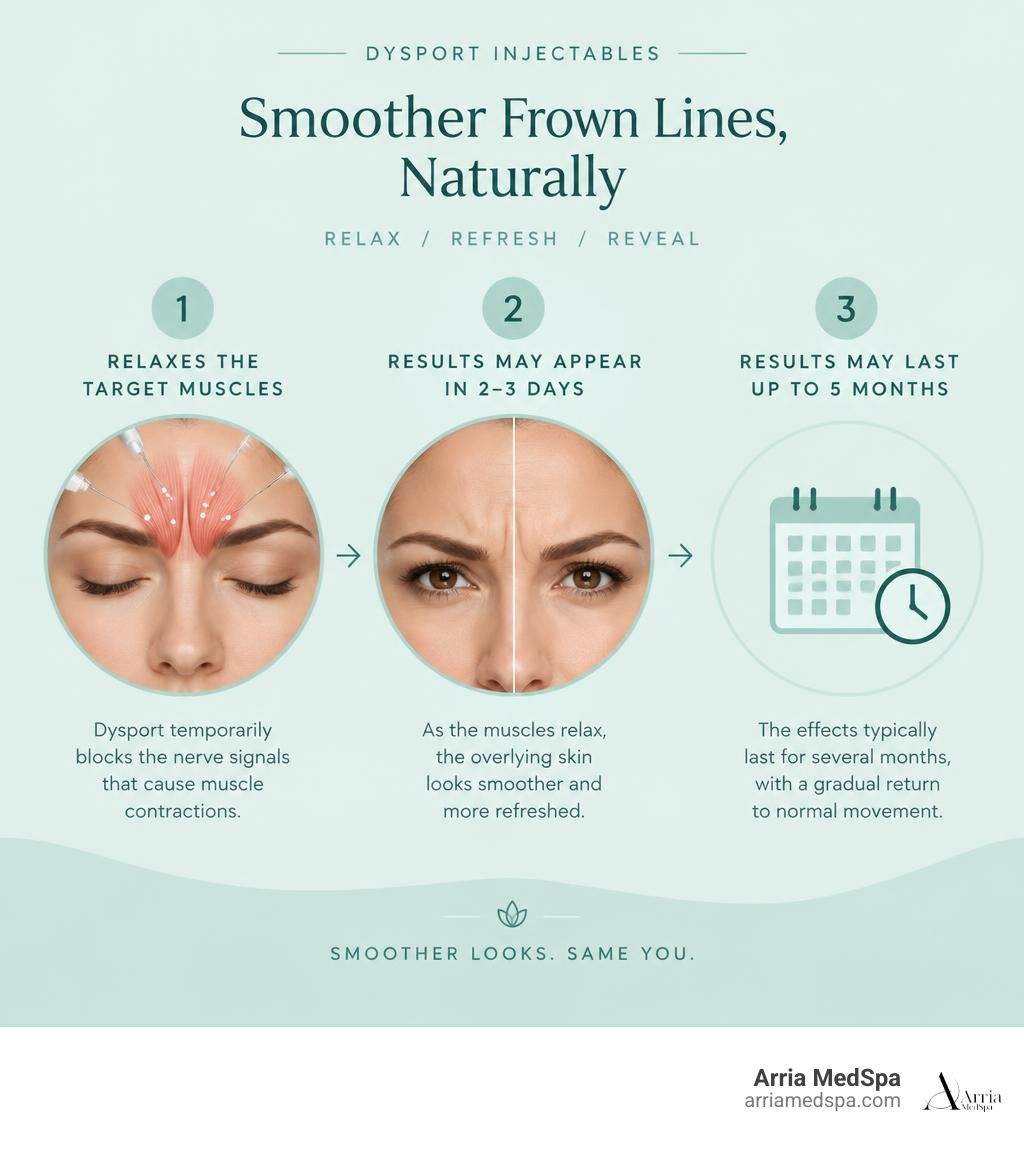
Dysport injectables temporarily relax the muscles that make frown lines between the eyebrows. Dysport is FDA-approved to soften moderate to severe frown lines in adults under 65. Results often begin to appear in two to three days and may last up to five months. A qualified healthcare professional can help you decide whether it fits your goals and medical history.
At Arria MedSpa’s state-of-the-art facility in Montclair, NJ, personalized consultations focus on natural-looking results. This guide explains what Dysport does, what treatment involves, and the safety questions to ask before an injection.
I’m Stephanie J. Rosen, a board-certified physician assistant with experience in plastic surgery and dermatology since 2005. My background in cosmetic medicine helps me explain dysport injectables in clear, practical terms.
What Are Dysport Injectables and How Do They Work?
Every time you squint, frown, or concentrate, your facial muscles contract beneath your skin. Over years of repeated movement, these dynamic contractions create creases known as dynamic wrinkles. Dysport is an injectable neuromodulator containing abobotulinumtoxinA, a purified protein designed to address these expression lines at the source.
When injected into specific target muscles, Dysport functions as a local neuromuscular blocker and acetylcholine release inhibitor. Acetylcholine is the primary chemical messenger that tells your muscles to shorten and tighten. By temporarily stopping the release of acetylcholine at the motor nerve endings, Dysport allows overworked facial muscles to rest. As the muscle movement softens, the overlying skin smooths out, significantly diminishing the depth of visible creases.
Patients can learn more by reviewing Discover Dysport® Injections | Benefits and What to Expect or exploring our overview of injectable treatments explained. Understanding the underlying biology of these treatments helps you set realistic expectations for your aesthetic appointments.
FDA-Approved and Therapeutic Uses for Dysport Injectables
Aesthetic medicine represents only one aspect of Dysport’s clinical capabilities. For cosmetic purposes, Dysport received its initial U.S. FDA approval in 2009 for the temporary improvement of moderate to severe glabellar lines—often called frown lines or “11 lines”—in adults under 65 years of age. Over 2.3 million people in the United States and more than 100 million individuals globally have received Dysport treatments.
Beyond aesthetics, Dysport holds several medical approvals for therapeutic conditions:
- Adult Cervical Dystonia: Approved in 2009 to decrease the severity of abnormal head position and neck pain associated with involuntary muscle contractions.
- Adult Upper and Lower Limb Spasticity: Approved in 2015 and 2017 to manage increased muscle stiffness in the elbows, wrists, fingers, and lower extremities.
- Pediatric Limb Spasticity: Approved in 2016 and 2019 for pediatric patients aged 2 years and older to address muscle stiffness in both lower and upper limbs.
Healthcare providers and patients can explore these medical indications further through the official FDA-approved therapeutic indications resource.
How Dysport Compares to Botox and Other Neuromodulators
Prospective patients frequently ask how Dysport compares to other popular wrinkle relaxers, particularly Botox Cosmetic (onabotulinumtoxinA). While both products belong to the botulinum toxin type A family and share the same core mechanism of action, they are manufactured differently and possess distinct clinical properties.
| Feature | Dysport (abobotulinumtoxinA) | Botox (onabotulinumtoxinA) |
|---|---|---|
| Active Molecule | AbobotulinumtoxinA | OnabotulinumtoxinA |
| Cosmetic FDA Approvals | Glabellar lines (frown lines) | Glabellar lines, forehead lines, crow’s feet |
| Typical Onset Time | 2 to 3 days (some within 24 hours) | 4 to 7 days (full results in 14 to 30 days) |
| Average Duration | Up to 4 to 5 months | 3 to 4 months |
| Diffusion Profile | Broader spread radius | More localized, concentrated spread |
| Standard Glabellar Dose | 50 Units (across 5 points) | 20 Units (across 5 points) |
| Trace Components | Human albumin and cow’s milk protein | Human albumin and sodium chloride |
Dysport tends to diffuse slightly farther from the exact point of injection than Botox. This wider spread can be particularly advantageous when smoothing broader dynamic areas, such as wide forehead zones or strong glabellar complexes, allowing for seamless blending. However, this same diffusion profile requires an injector with advanced anatomical knowledge to prevent unwanted relaxation in adjacent muscles.
To read an in-depth breakdown of these products, explore our guide on Botox vs Dysport differences and read this clinical comparison of neuromodulators.
The Treatment Experience: Dosage, Administration, and Timeline
A standard aesthetic Dysport appointment is quick, straightforward, and virtually painless, generally taking only 10 to 20 minutes from start to finish.
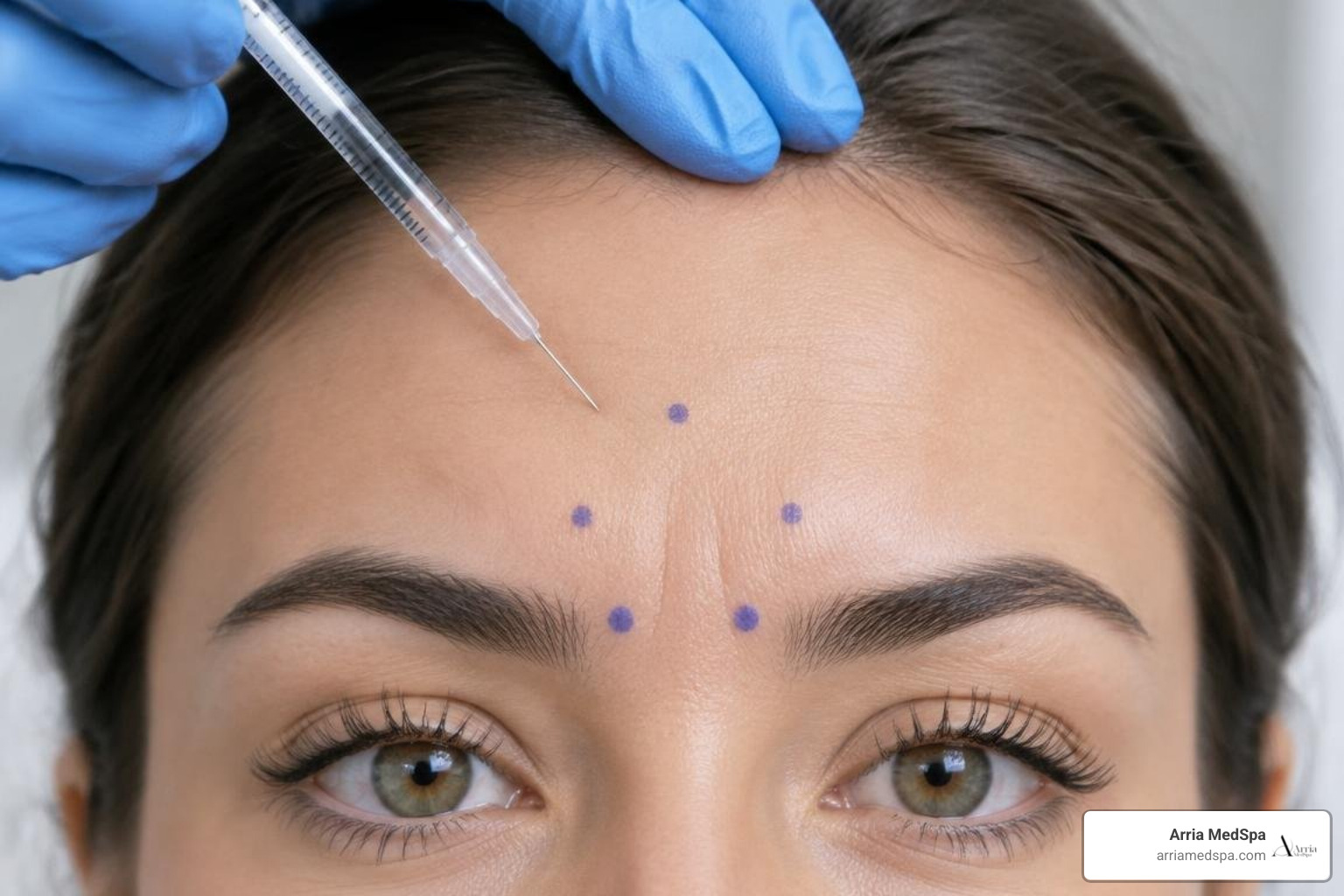
During your appointment, your provider begins by cleansing the skin and evaluating your facial movement. You will be asked to frown deeply so your provider can manually palpate the thickness and movement patterns of your corrugator and procerus muscles.
The standard FDA-approved clinical dose for glabellar frown lines is a total of 50 Units, divided evenly into five equal aliquots of 10 Units each:
- One injection directly into the central procerus muscle located between the lower brows.
- Two injections into the medial and lateral aspects of the right corrugator muscle.
- Two injections into the medial and lateral aspects of the left corrugator muscle.
To ensure safety and avoid complications like eyelid drooping, your injector places these injections at least 1 centimeter above the bony supraorbital ridge and central eyebrow margin.
Onset Speed and Expected Longevity with Dysport Injectables
One of the standout benefits of Dysport is how quickly it takes effect. In clinical trials (such as studies GL-1 and GL-3), between 15% and 33% of patients observed an initial onset of response as early as Day 1. The median time to visible onset across major clinical trials is just 2 to 3 days, compared to 4 to 7 days for many other neurotoxins.
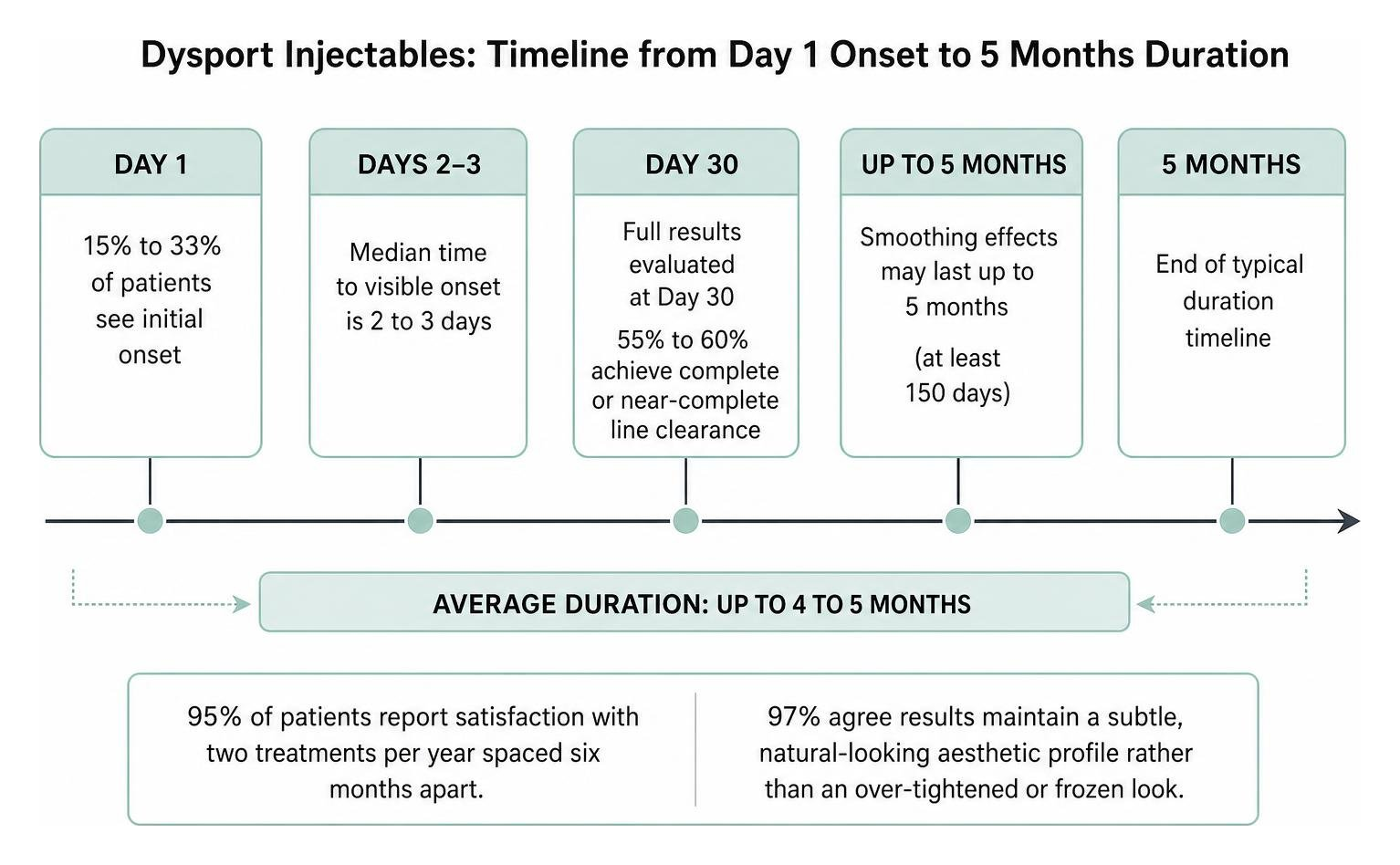
Full aesthetic results are typically evaluated at Day 30, where clinical studies show that 55% to 60% of patients achieve complete or near-complete line clearance. Clinical data shows that the smoothing effects of Dysport may last up to 5 months (at least 150 days). In fact, 95% of patients report satisfaction when receiving just two treatments per year spaced six months apart, and 97% agree their results maintain a subtle, natural-looking aesthetic results profile rather than an over-tightened or frozen look.
Preparation Guidelines and Recovery Protocol
Preparing for a Dysport session requires minimal effort, but following a few proactive guidelines helps minimize minor bruising and swelling:
- Avoid Blood-Thinning Agents: For 3 to 7 days prior to treatment, avoid over-the-counter blood thinners such as aspirin, ibuprofen, naproxen, high-dose vitamin E, fish oil, and Ginkgo Biloba (unless prescribed by your physician).
- Limit Alcohol: Avoid consuming alcohol for 24 hours before and after your appointment to decrease bruising risk.
- Arrive with Clean Skin: Avoid heavy makeup or skincare products on the day of your session.
Because Dysport is among the most convenient non-surgical aesthetic procedures, recovery involves virtually zero downtime. Most patients immediately return to work or their normal daily routines. For optimal outcomes during the first 24 hours, follow these straightforward aftercare steps:
- Remain upright for at least 4 hours post-treatment.
- Avoid rubbing, massaging, or applying heavy pressure to the treated area.
- Skip strenuous physical workouts, saunas, hot tubs, and intense heat exposure for 24 hours.
Safety Profile, Boxed Warnings, and Ideal Candidates
Dysport has an established safety record supported by more than 15 years of regulatory approvals and extensive clinical trials. However, confirming candidate suitability remains a critical first step.
Ideal candidates for aesthetic Dysport treatments include:
- Adults between the ages of 18 and 64 looking to soften moderate to severe dynamic frown lines.
- Patients seeking fast-acting wrinkle reduction before upcoming events.
- Men and women with strong, dense facial muscles who benefit from Dysport’s strength and spread profile.
For a comprehensive medical breakdown, patients can consult the official Dysport Full Prescribing Information.
Common Side Effects and the Distant Spread Boxed Warning
Most side effects associated with Dysport are mild, temporary, and localized directly to the injection area. In clinical trials for glabellar lines, reported side effects occurring in 2% or more of patients included:
- Nasopharyngitis (minor nose and throat irritation) (10%)
- Headache (9%)
- Local injection site pain or discomfort (3%)
- Injection site reactions such as redness or mild swelling (3%)
- Upper respiratory tract infection (3%)
- Eyelid edema (swelling) (2%)
- Eyelid ptosis (drooping) (2%)
- Sinusitis (2%)
- Nausea (2%)
FDA Boxed Warning on Distant Spread of Toxin Effect: All botulinum toxin products, including Dysport, carry an FDA Boxed Warning regarding the potential for distant spread of toxin effects beyond the injection site. In rare cases, the effects of the botulinum toxin may spread to areas distant from the site of administration, producing botulism-like symptoms. These symptoms can include generalized muscle weakness, double vision, blurred vision, eyelid drooping, dysphonia (voice changes), dysarthria (slurred speech), urinary incontinence, and swallowing or breathing difficulties.
Swallowing and breathing difficulties can be severe and life-threatening, particularly in patients with pre-existing conditions that predispose them to these symptoms (such as ALS, myasthenia gravis, or Lambert-Eaton syndrome). Aesthetic patients receiving standard glabellar doses (50 Units) face an exceptionally low risk, but any patient who experiences difficulty breathing, speaking, or swallowing after an injection must seek immediate emergency medical care.
Finding a Qualified Injector and Cost Expectations
Selecting a highly experienced, medically licensed provider is the most reliable way to ensure safe administration and natural outcomes. Neurotoxins require an exact understanding of facial musculature, nerve pathways, and tissue depth. Never receive injectable treatments at non-medical facilities, informal parties, or from unlicensed practitioners.
From a financial perspective, the average cost of a cosmetic Dysport session is approximately $400, though total pricing varies based on individual muscle strength, total units administered, and provider expertise. While Dysport is priced lower per unit than Botox (reflecting the 2.5:1 unit ratio), the overall cost for a full treatment session is generally comparable.
We always emphasize the value of personal medspa consultations where your unique facial contours and aesthetic preferences can be assessed one-on-one before treatment begins.
Frequently Asked Questions About Dysport
Can Dysport Units Be Converted 1:1 with Botox?
No. The potency units of Dysport are specific to its proprietary manufacturing process and laboratory assay method. They are not interchangeable with or convertible to units of any other botulinum toxin brand. In clinical practice, injectors commonly use an approximate 2.5:1 ratio (meaning roughly 25 Dysport units provide an effect comparable to 10 Botox units), but dosages must always be calculated independently based on the specific product formulation.
How Soon Can I Return to Daily Activities After Injections?
You can resume most normal daily activities immediately following your appointment. However, you should avoid strenuous physical exercise, heavy lifting, lying flat, and rubbing your forehead for at least 4 to 24 hours after injection. These simple precautions keep the product securely positioned within the target muscles while it binds to the motor nerve endings.
Who Should Avoid Receiving Dysport Treatments?
Dysport is contraindicated for individuals with a known hypersensitivity to any botulinum toxin preparation or to any ingredient in the formulation, including cow’s milk protein. It should never be injected into areas with an active skin infection. Furthermore, Dysport is not recommended for women who are pregnant or nursing, individuals under 18 years of age, or patients diagnosed with neuromuscular disorders such as myasthenia gravis, ALS, or Lambert-Eaton syndrome.
Discover Your Rejuvenated Look at Arria MedSpa
Softening deep expression lines does not mean compromising your natural facial movement. Under the direction of experienced medical professionals, Dysport provides reliable, fast-acting smoothing that helps you look refreshed, well-rested, and confident.
At Arria MedSpa in Montclair, NJ, our treatments combine rigorous board-certified surgeon oversight with an artistic approach tailored to your individual facial anatomy. We proudly serve clients throughout Essex County and surrounding North Jersey communities—including Glen Ridge, Verona, Cedar Grove, Clifton, and Bloomfield. When you are ready to explore your options, we invite you to book an expert injectable consultation with our team.