

Do Fillers Ruin Your Face? Here’s What You Need to Know First
Do fillers ruin your face? The short answer is: not when they’re done correctly. But the longer answer is more nuanced — and worth understanding before you book an appointment.
Quick answer:
| Situation | Does It Ruin Your Face? |
|---|---|
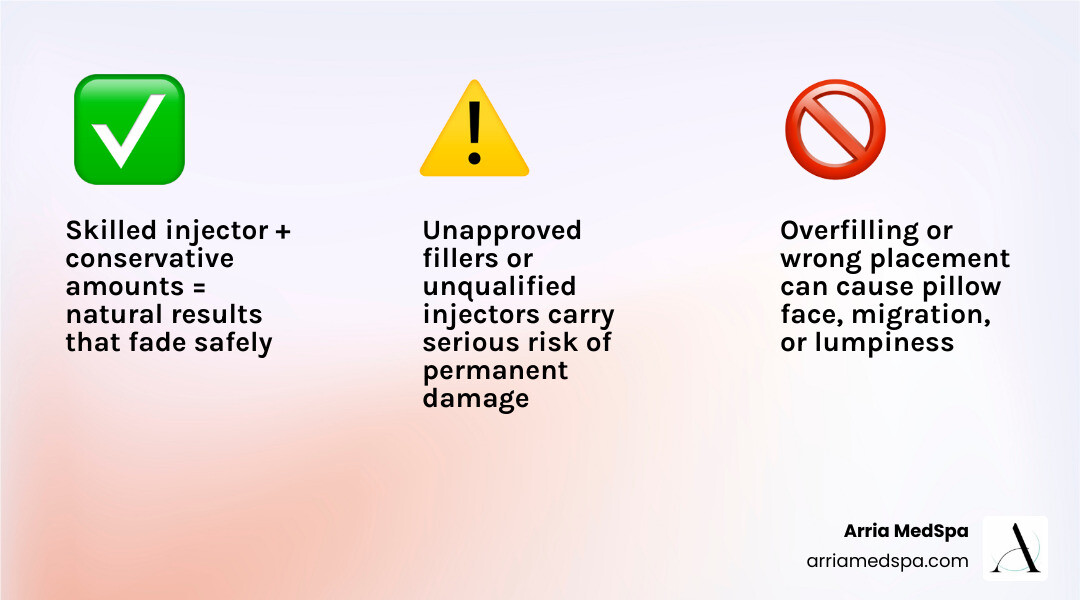
| Skilled injector, conservative amounts | No — results look natural and fade safely |
| Overfilling or wrong placement | Can cause pillow face, migration, or lumpiness |
| Repeated treatment without reassessment | Risk of filler fatigue and unnatural density |
| Unapproved fillers or unqualified injectors | Serious risk of permanent damage |
The fear is real and understandable. Scroll social media long enough and you’ll find cautionary tales — celebrities like Courteney Cox who publicly admitted that repeated filler use became her “biggest beauty regret” before she had it all dissolved. These stories leave many women wondering if fillers are worth the risk at all.
Here’s the truth: the filler itself is rarely the villain. The problems almost always come down to too much product, the wrong placement, or an injector who doesn’t fully understand facial anatomy.
In 2023, 75% of facial plastic surgeons reported increased demand for fillers from patients under 30 — meaning more people than ever are making these decisions, often without fully understanding the long-term picture.
This guide is here to change that.
I’m Stephanie J. Rosen, a Board-Certified Physician Assistant with over 20 years of experience in plastic surgery and cosmetic medicine — and I’ve seen how the question of do fillers ruin your face comes down to technique, product choice, and realistic expectations. As we walk through everything you need to know, my goal is to give you the clear, honest information that helps you make a confident decision.
What Are Dermal Fillers and How Do They Work?
To understand whether cosmetic treatments can cause long-term damage, we first have to understand what these products actually are. Dermal fillers are smooth, gel-like substances injected just beneath the skin. They are designed to restore lost volume, smooth out deep wrinkles, and enhance natural contours.
The vast majority of modern treatments rely on injectable hyaluronic acid dermal fillers. Hyaluronic acid (HA) is a sugar molecule that occurs naturally in our skin, joints, and connective tissues. Its superpower is its hydrophilic nature—meaning it loves water. A single molecule of hyaluronic acid can hold up to 1,000 times its weight in water, acting like a tiny sponge that keeps your tissues plump, hydrated, and youthful.
When we inject HA-based cosmetic fillers, they don’t just sit statically as inert blobs. They immediately begin attracting water molecules from the surrounding tissue, which inflates the gel and creates an instant, soft volumizing effect. This is why you see an immediate difference in areas like the lips, tear troughs, or cheeks.
Beyond simple volume replacement, certain fillers can also stimulate natural collagen and elastin production over time. As the gel slowly integrates with your facial tissues, the mechanical stretching of the skin cells (fibroblasts) can trigger your body to lay down new collagen networks.
However, not all fillers are created equal. Different formulations feature different cross-linking technologies, which determine how thick, firm, or flexible the gel is. For example, a highly flexible filler is perfect for dynamic areas like the lips, while a firmer, more robust gel is required to mimic bone structure along the jawline or cheeks. Using the wrong formula in the wrong area is one of the primary reasons patients worry that treatments will ruin their natural features.
Do Fillers Ruin Your Face? The Truth About Long-Term Changes
The most common fear patients voice during consultations is that fillers will stretch out their skin permanently, leaving them with sagging “empty pockets” once the product metabolizes.
Physiologically, our skin is incredibly elastic. When small, conservative amounts of filler are injected, the skin easily expands and rebounds without losing its structural integrity. When the filler eventually breaks down through your body’s natural metabolic processes, your face simply returns to its baseline appearance—not a stretched-out or degraded state.
However, the timeline of this process is where science has recently evolved. For years, the aesthetic industry marketed hyaluronic acid fillers as temporary tweaks that completely disappear within 6 to 18 months. Modern medical imaging has challenged this assumption.
According to a groundbreaking ABC News report on filler longevity, MRI studies have revealed that dermal fillers can remain in the facial tissues for up to 10 years after the initial injection. Even when the visible volumizing effect seems to have faded, trace amounts of the gel often persist deep within the tissue planes.
This long-term persistence means that if you get “topped off” every few months based solely on the calendar rather than an objective clinical assessment, you may be piling new product on top of old, un-metabolized filler. Over time, this cumulative volume stacking can alter your natural facial dynamics.
As highlighted in the Green Matters expert analysis, fillers do not inherently ruin your face when administered with anatomical precision and conservative dosing. The damage occurs when the tissues are subjected to “filler bombing”—the aggressive, repetitive over-injection of product that ignores the natural limits of your facial anatomy.
Understanding Overfilled Syndrome, Pillow Face, and Migration
When the delicate balance of facial volume is disrupted by over-injection or poor product choice, it can lead to “Overfilled Syndrome.” The most recognizable manifestation of this is “pillow face”—a look characterized by unnaturally puffy, rounded cheeks, a loss of normal shadow definitions, and eyes that appear smaller or “squeezed” when smiling.
Another common issue is filler migration, which occurs when the injected gel moves away from its original placement site into adjacent tissue compartments. Because hyaluronic acid is highly hydrophilic, migrated filler continues to attract water, leading to chronic, low-level swelling (edema) in areas where it doesn’t belong.
| Normal Filler Integration | Overfilled Syndrome & Migration |
|---|---|
| Placed in deep tissue planes or against bone | Placed too superficially or in crowded compartments |
| Respects natural facial contours and shadows | Erases natural shadows, creating a flat, puffy look |
| Moves naturally during facial expressions | Restricts muscle movement, appearing stiff or heavy |
| Gradually metabolizes over time | Accumulates, stacks, and stretches the overlying tissue |
How Overfilling and Migration Occur
Overfilling and migration are rarely the result of a single, isolated treatment. Instead, they develop incrementally over several years.
- Incorrect Depth: If a firm filler designed for deep structural support (like cheek or jawline definition) is injected too superficially into the subcutaneous fat or dermal layers, gravity and muscle movement will cause it to shift.
- High-Volume Injections: Injecting too many syringes in a single session forces the gel to find space elsewhere, pushing it out of the target zone.
- Muscle Movement: The face is a highly dynamic environment. Constant muscle contractions from talking, laughing, and chewing can slowly squeeze misplaced filler into nearby, less-dense tissue planes.
- Volume Stacking: Getting routine touch-ups before the previous filler has actually metabolized leads to a slow build-up. Over time, this can strain the delicate facial ligaments that hold your fat pads in place.
Why Poor Technique Can Do Fillers Ruin Your Face
In experienced hands, fillers are exceptionally safe. However, in the hands of an unqualified injector, poor technique can cause genuine, lasting damage to your facial structures.
As detailed in a concerning Newsner report on long-term filler damage, repeated over-injection can lead to chronic lymphatic obstruction. When excessive gel is packed into tight facial compartments, it can compress the tiny lymphatic channels responsible for draining fluid from your face. This obstruction leads to persistent swelling, particularly under the eyes, making the face look perpetually tired or bloated.
Furthermore, severe complications like vascular occlusion—where filler is accidentally injected directly into a blood vessel—can block blood flow to the skin. If not recognized and treated immediately with a dissolving agent, this can lead to tissue necrosis (skin death) and permanent scarring.
How to Prevent Complications and Choose a Qualified Injector
The single most effective way to ensure your cosmetic treatments enhance your beauty rather than ruin your face is to choose your injector with extreme care.
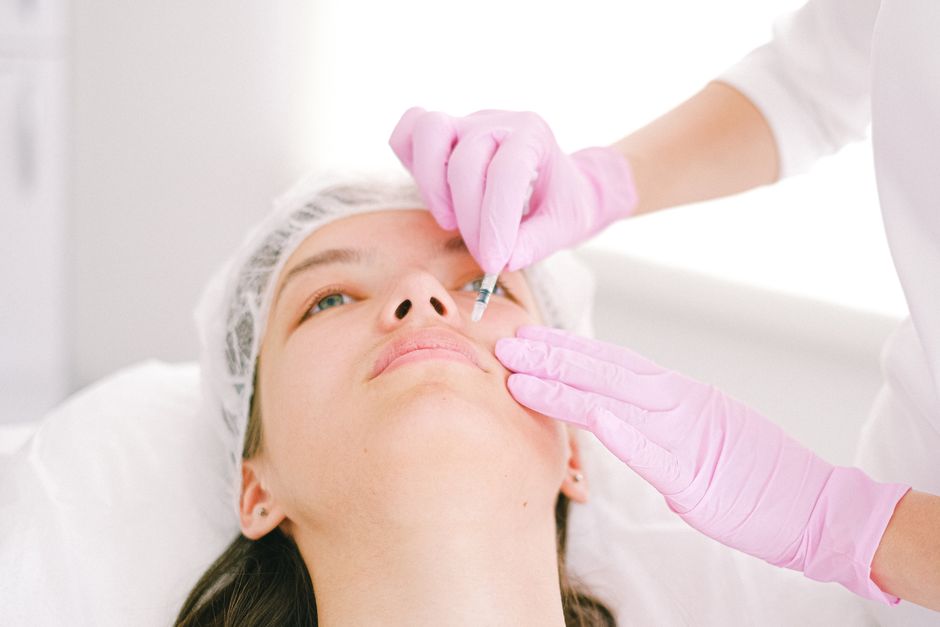
A qualified medical injector does not simply look at a wrinkle and fill it. They evaluate your face as a three-dimensional, dynamic structure. They understand how bone resorption, fat pad descent, and skin laxity interact as you age.
When you are looking to restore a youthful structure without undergoing surgery, a comprehensive approach like a liquid facelift options can be highly effective. Rather than chasing individual lines, a strategic liquid facelift places micro-doses of filler at key structural anchor points—such as the lateral cheeks and temple areas—to softly lift and support the lower face naturally.
To ensure your safety and achieve beautiful, natural-looking results, look for the following when choosing a provider:
- Medical Credentials: Your injector should be a licensed medical professional (such as a Board-Certified Plastic Surgeon, Dermatologist, Physician Assistant, or Nurse Practitioner) who specializes in aesthetic medicine.
- Anatomical Expertise: They should demonstrate a profound understanding of facial nerve pathways, vascular structures, and deep fat compartments.
- A Conservative Philosophy: A great injector will always advocate for a “less is more” approach. They should be willing to say “no” if they believe adding more volume will compromise your natural facial harmony.
At Arria MedSpa in Montclair, NJ, we believe that aesthetic medicine is a blend of art and rigorous medical science. Every treatment we perform is backed by strict board-certified surgeon oversight, ensuring the highest standards of clinical safety and artistic precision.
Reversing and Dissolving Dermal Fillers
One of the greatest peace-of-mind benefits of choosing hyaluronic acid-based fillers is that they are entirely reversible. If you are unhappy with your results, or if you are experiencing migration or overfilling from historic treatments, the product can be safely dissolved.
This is accomplished using an injectable enzyme called hyaluronidase. When injected into the treated area, hyaluronidase instantly begins breaking the cross-linked bonds of the synthetic hyaluronic acid gel, reducing it to simple sugars that your body’s lymphatic system safely clears away within a few days.
Can Dissolving Treatments Do Fillers Ruin Your Face?
A common concern among patients seeking corrective work is whether the dissolving enzyme will damage their natural tissues or degrade their body’s own hyaluronic acid.
According to Dr. Kopelman’s guide on filler safety, hyaluronidase is highly effective and safe when used correctly. While the enzyme will temporarily break down some of your skin’s natural hyaluronic acid along with the filler, your body constantly produces its own natural HA.
Any natural hydration lost during the dissolving process is fully replenished by your body within 24 to 48 hours. Your skin’s natural elasticity and texture will rebound beautifully, allowing you to reset your facial canvas safely before deciding on any future, more conservative treatments.
Alternatives to Traditional Dermal Fillers
If you love the idea of facial rejuvenation but want to avoid the risks of volume stacking and filler migration altogether, there are excellent alternative treatments available. Instead of placing a physical gel under the skin to mimic volume, these treatments encourage your body to rebuild its own youthful architecture.
- Sculptra (Poly-L-Lactic Acid): Unlike traditional fillers, Sculptra is a biostimulator. It is injected as a smooth liquid suspension that gradually absorbs, leaving behind microscopic particles that signal your cells to produce fresh, healthy type-1 collagen. Over several months, Sculptra restores subtle, natural volume and dramatically improves skin firmness.
- Radiesse (Calcium Hydroxylapatite): Radiesse works double-duty. It provides immediate structural contouring upon injection, while its calcium-based microspheres act as a scaffold, stimulating long-term collagen and elastin production. When diluted, it can also be used as a hyper-diluted skin-tightening treatment to rebuild crepey skin on the face, neck, and hands.
These biostimulating treatments offer a soft, incredibly natural rejuvenation that ages gracefully with you, completely eliminating the risk of “pillow face” or product migration.
Frequently Asked Questions About Dermal Fillers
How long do fillers actually stay in your face?
While many filler brands are marketed to last between 6 and 18 months, modern MRI imaging proves that small amounts of hyaluronic acid filler can remain in the facial tissues for up to 10 years. Because the gel is highly hydrophilic, it can slowly absorb water and maintain its volume deep within the tissue planes long after the initial cosmetic effect seems to have softened.
Does filler stretch out your skin permanently?
No. When administered in conservative, anatomically appropriate amounts, fillers do not stretch out your skin. Healthy skin possesses a high degree of natural elasticity and will easily contract back to its baseline state as the filler slowly metabolizes or is dissolved. Permanent stretching only occurs with extreme, long-term overfilling.
Can fillers migrate years after injection?
Yes, late-stage migration can occur. Over time, the constant micro-movements of your facial muscles, combined with gravity and natural aging, can slowly nudge misplaced or excessive filler gel out of its original compartment and into adjacent tissue planes. This is why a conservative approach and regular structural assessments are so vital.
Your Best Next Step for Safe, Natural-Looking Results
Dermal fillers do not have to ruin your face. When used strategically, sparingly, and with an artistic eye, they remain one of the most powerful and elegant tools in non-surgical facial rejuvenation. The key to beautiful, undetectable results lies in respecting your natural anatomy and choosing an injector who prioritizes tissue health and long-term vitality over quick, dramatic changes.
At Arria MedSpa, located in beautiful Montclair, NJ, we serve clients from surrounding communities including Bloomfield, Glen Ridge, Verona, and beyond. We combine the safety of board-certified surgeon oversight with a deeply personalized, conservative approach to cosmetic enhancements.
Ready to refresh your look with absolute confidence? Explore our customized Arria MedSpa Skin Treatments and schedule your personal consultation with our expert medical team today.